Saturday, May 13, 2006

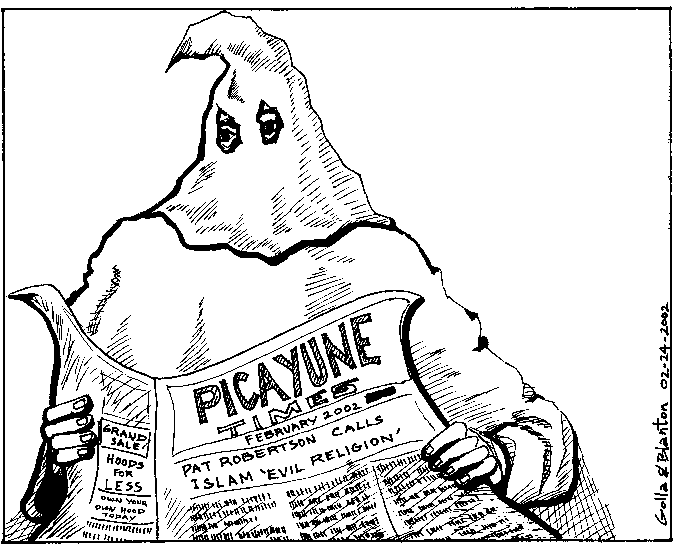
Top US evangelist targets Islam

Outspoken US Christian evangelical broadcaster Pat Robertson has accused Muslims of planning world domination, and said some were "satanic".

On his live television programme, The 700 Club, he said radical Islamists were inspired by "demonic power".

A US religious liberty watchdog called the comments "grossly irresponsible".

Mr Robertson had to apologise recently for calling for Venezuela's president to be killed, and saying Ariel Sharon was struck down by divine retribution.

His latest comments were expunged from The 700 Club's website, but Mr Robertson's Virginia-based Christian Broadcasting Network confirmed them with a transcript.

'Crazed fanatics'

On the programme, the 75-year-old preacher responded to a news item about the reaction of Muslims in Europe to the publishing of cartoons satirising the Prophet Muhammad.

The footage showed Muslims screaming "May Allah bomb you! May Osama Bin Laden bomb you!"

Mr Robertson said the pictures "just shows the kind of people we're dealing with. These people are crazed fanatics, and I want to say it now: I believe it's motivated by demonic power. It is satanic and it's time we recognize what we're dealing with".

He went on to say that "Islam is not a religion of peace", and "the goal of Islam, ladies and gentlemen whether you like it or not, is world domination".

Mr Robertson said in a statement later he was referring specifically to terrorists as being motivated by Satan.

Outstanding Photo Blog

This shows the amazing work of Dan Chung.. please see to enjoy...

Invisible city

Chongqing is the fastest-growing urban centre on the planet. Its population is already bigger than that of Peru or Iraq, with half a million more arriving every year in search of a better life. And yet so frequently is this story repeated in China, that outside the country its name barely registers. Jonathan Watts spends 24 hours in the megalopolis you've never heard of
Jonathan Watts
Wednesday March 15, 2006
Guardian
At some point this year, our species will prove Darwin wrong. For the first time since the dawn of civilisation, the human being is about to become a predominantly urban creature: humans have not evolved to fit our habitat, we have changed our habitat to suit ourselves.
According to the United Nations, the planet's population is currently split almost right down the middle: 3.2 billion in the city, 3.2 billion in the countryside. But by the start of 2007, the balance will have tipped decisively away from the fields and towards the skyscrapers.
No one knows for sure precisely where and when urban life started. But we can make a good guess about where the urbanising trend will reach its zenith. Simply count which skylines have the most cranes, track where the bulk of the world's concrete is being poured or follow one of the biggest, fastest movements of humanity in history. All lead east, to China.
Every year, 8.5 million Chinese peasants move into cities. Most of their destinations are mere specks on western maps, if they appear at all. But their populations put them on a par with some of the world's megalopolises. Britain has five urban centres of more than a million people; China has ninety. A few - Beijing, Shanghai, Hong Kong and Nanjing - are well known around the world. The names of many others - Suqian, Suining, Xiantao, Xinghua, Liuan - are unfamiliar even to many Chinese. Nowhere is the staggering urbanisation of the world more evident than in Chongqing. Never heard of it? This is where the pace and scale of urbanisation is probably faster and bigger than anywhere in the world today. This is the Coketown of the early 21st century.
Set in the middle reaches of the Yangtze, this former trading centre and treaty port has long been the economic hub of western China. But after its government was given municipal control of surrounding territory the size of many countries, it has grown and grown, becoming what is now the world's biggest municipality with 31 million residents (more people than Iraq, Peru or Malaysia). The population in its metropolitan areas will double from 10 million to 20 million in the next 13 years.
When the planet's rural-urban balance tips, it is as likely to happen here as anywhere. To get a snapshot, I spent a day with a Channel 4 film crew in this megalopolis - just the sort of day, in fact, when humanity might pass the halfway point on its millennia-long journey out of the countryside.

Back to the future

Robert Tait looks back more than 50 years to the last time Iran was referred to the world's official guardian of peace and security

Robert Tait

Wednesday March 15, 2006

Guardian Unlimited

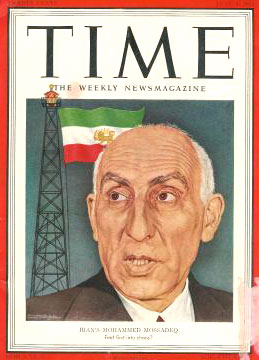
Standing before the hallowed chambers of the UN security council, the charismatic Iranian leader confronted his adversaries with the combative defiance that was his hallmark. Bullying foreigners, he proclaimed, wanted to deny Iran its legitimate right to an energy resource vital to its future. No amount of international pressure would force his government to retreat from a position that had the full support of the great Iranian nation. To almost universal surprise, security council members were swayed by the demagogic statesman's arguments and voted to shelve the resolution rather than take punitive action against Iran. It was a devastating blow for a prevailing western worldview whose sense of self-righteousness had never before suffered such a sharp reverse. With Iran's nuclear case finally going before the council this week, it is a scenario the US and EU hope is too far fetched to become reality as they endeavour to force Tehran to abandon a programme they believe is designed to produce an atomic bomb. Yet it is not fantasy, but a description of what happened the last time Iran was referred to the security council. The date was October 1951, and the Iranian leader addressing the august body was Mohammed Mossadeq, the democratically-elected prime minister, who had outraged Britain by nationalising his country's British-owned oil industry. After moving warships to the Persian gulf and imposing a blockade intended to cripple the Iranian economy, Britain sought to regain control of the Anglo-Iranian Oil Company by having Iran referred to the security council, with the humiliating results just described. But that wasn't the end of the story. Having failed to achieve their ends through diplomacy, the British resorted to sinister underhand means. With official approval, the British secret service - the forerunner of MI6 - colluded with the CIA to stage a coup in which Mossadeq's government was toppled and the rule of the last shah, until then teetering and uncertain, re-established.

Latin America and Asia are at last breaking free of Washington's grip

The US-dominated world order is being challenged by a new spirit of independence in the global south

Noam Chomsky

Wednesday March 15, 2006

The Guardian

The prospect that Europe and Asia might move towards greater independence has troubled US planners since the second world war. The concerns have only risen as the "tripolar order" - Europe, North America and Asia - has continued to evolve. Every day Latin America, too, is becoming more independent. Now Asia and the Americas are strengthening their ties while the reigning superpower, the odd man out, consumes itself in misadventures in the Middle East. Regional integration in Asia and Latin America is a crucial and increasingly important issue that, from Washington's perspective, betokens a defiant world gone out of control. Energy, of course, remains a defining factor - the object of contention - everywhere. China, unlike Europe, refuses to be intimidated by Washington, a primary reason for the fear of China by US planners, which presents a dilemma: steps toward confrontation are inhibited by US corporate reliance on China as an export platform and growing market, as well as by China's financial reserves - reported to be approaching Japan's in scale. In January, Saudi Arabia's King Abdullah visited Beijing, which is expected to lead to a Sino-Saudi memorandum of understanding calling for "increased cooperation and investment between the two countries in oil, natural gas and investment", the Wall Street Journal reports.

Fishing for a Pretext to Squeeze Iran

By Juan Cole
Iran threatened last week to use the oil weapon if the United Nations Security Council imposes sanctions on the country because of its nuclear research program, promising “harm and pain” to the United States. In addition to consumer anxieties about oil prices, rumors of a planned U.S. or Israeli airstrike on Iran keep flying, and neighboring Iraqi Shiites have threatened reprisals if that is done to their brethren. What is driving the crisis between the Bush administration and Iran and ratcheting up the rhetoric? Iranian Interior Minister Mostafa Pour-Mohammadi said on Friday, “If sanctions are imposed, we will definitely use the oil tool and other tools and we will stop at nothing.” The regime is clearly fearful of an international economic boycott, but feels it has its own advantages in the struggle. With increasing demand from India and China and instability in Nigeria and Iraq, Iran’s crude oil exports are important in maintaining an affordable price, especially in the winters. In some ways, by invading Iraq and destabilizing it, as well as fostering the rise of Shiite religious parties in Baghdad, the Bush administration has inadvertently strengthened Shiite Iran’s hand. Although the doubling of petroleum prices in the past two years has so far been absorbed by the world economy, many analysts are convinced that if the price went up to $75 a barrel and stayed there for two years, it would add significantly to the underlying rate of inflation and begin subtracting 2.5% a year from world growth. President Mahmoud Ahmadinejad chimed in with regard to the American threats: “They know that they are not capable of causing the least harm to Iranian people. They will suffer more.” From cbc.ca Related Links “Bush Ties Iran to Roadside Bombs in Iraq" (March 13, 2006) The president asserts that many of the improvised explosive devices (IEDs), which have proved so deadly to U.S. forces in Iraq, originate in Iran.(March 13, 2006) Washington Post article about Bush’s attempt to build opposition to theocracy in Iran.“New ‘Cold War’ Looms with Iran" (March 13, 2006) BBC article on how the U.S. relationship with Tehran is starting to resemble its pre-1989 relationship with the U.S.S.R.“Britain Wants to Leave the Door Open to Negotiate With Iran" (March 13, 2006) Britain’s foreign secretary, Jack Straw, says that any U.N. pressure on Iran should be “incremental” and “reversible."“Russia Accuses Iran of Blocking Nuclear Diplomacy" (March 13, 2006) Russia’s foreign minister, Sergei Lavrov, says “Iran is absolutely no help to those who want to find peaceful ways to solve this problem."Iran is a mid-size country of some 70 million, with a per capita income of only about $2,000 a year. It has no weapons of mass destruction, and its conventional military forms no threat to the United States. From an Iranian point of view, the Americans are simply being unreasonably aggressive. Supreme Jurisprudent Ali Khamenei has given a fatwa or formal religious ruling against nuclear weapons, and President Ahmadinejad at his inauguration denounced such arms and committed Iran to remaining a nonnuclear weapons state. In fact, the Iranian regime has gone further, calling for the Middle East to be a nuclear-weapons-free zone. On Feb. 26, Ahmadinejad said: “We too demand that the Middle East be free of nuclear weapons; not only the Middle East, but the whole world should be free of nuclear weapons.” Only Israel among the states of the Middle East has the bomb, and its stockpile provoked the arms race with Iraq that in some ways led to the U.S. invasion of 2003. The U.S. has also moved nukes into the Middle East at some points, either on bases in Turkey or on submarines.

The Daily Show on Rummy and McGovern

Jon Stewart had a grand old time of picking apart Rumsfeld and the media over Ray McGovern's question to "the Donald." After Rumsfeld denies saying he told us where WMD's were in Iraq. He plays the tape of Rummy telling us exactly the opposite. Very funny, click here to watch...

Friday, April 14, 2006

Origami

An amazing series of origami constructions that are just mind-blowing. click here...

THE ASSEMBLY OF JEWISH NOTABLES

This is a piece that I found very interesting. Napoleon was testing the loyalty of Jews in his republic and also to incorporate them or in a sense destroy them. Some of these issues are relevant to Muslims in the West and could be asked of us. This is how another minority replied all those years ago.
Answers to NapoleonResolved, by the French deputies professing the religion of Moses, that the following Declaration shall precede the answers returned to the questions proposed by the Commissioners of His Imperial and Royal Majesty. The assembly, impressed with a deep sense of gratitude, love, respect, and admiration, for the sacred person of His Imperial and Royal Majesty, declares, in the name of all Frenchmen professing the religion of Moses, that they are fully determined to prove worthy of the favours His Majesty intends for them, by scrupulously conforming to his paternal intentions; that their religion makes it their duty to consider the law of the prince as the supreme law in civil and political matters; that consequently, should their religious code, or its various interpretations, contain civil or political commands, at variance with those of the French code, those commands would, of course, cease to influence and govern them, since they must, above all, acknowledge and obey the laws of the prince.
That, in consequence of this principle, the Jews have, at all times, considered it their duty to obey the laws of the state, and that, since the revolution, they, like all Frenchmen, have acknowledged no others.
First Question:Is it lawful for Jews to marry more than one wife?
Answer:It is not lawful for Jews to marry more than one wife: in all European countries they conform to the general practice marrying only one.Moses does not command expressly to take several, but he does not forbid it. He seems even to adopt that custom as generally prevailing, since he settles the rights of inheritance between children of different wives. Although this practice still prevails in the East, yet their ancient doctors have enjoined them to restrain from taking more than one wife, except when the man is enabled by his fortune to maintain several.
The case has been different in the West; the wish of adopting the customs of the inhabitants of this part of the world has induced the Jews to renounce polygamy. But as several individuals still indulged in that practice, a synod was convened at Worms in the eleventh century, composed of one hundred Rabbis, with Gershom at their head. This assembly pronounced an anathema against every Israelite who should, in future, take more than one wife.
Although this prohibition was not to last for ever, the influence of European manners has universally prevailed.
Second Question:Is divorce allowed by the Jewish religion?
Is divorce valid when not pronounced by courts of justice by virtue of laws in contradiction with those of the French Code? Answer: Repudiation is allowed by the law of Moses; but it is not valid if not Previously pronounced by the French code.In the eyes of every Israelite, without exception, submission to the prince is the first of duties. It is a Principle generally acknowledged among them, that, in every thing relating to civil or political interests, the law of the state is the supreme law. Before they were admitted in France to share the rights of all citizens, and when they lived under a particular legislation which set them at liberty to follow their religious customs, they had the ability to divorce their wives; but it was extremely rare to see it put into practice. Since the revolution, they have acknowledged no other laws on this head but those of the empire. At the epoch when they were admitted to the rank of citizens, the Rabbis and the principal Jews appeared before the municipalities of their respective places of abode, and took an oath to conform, in every thing to the laws, and to acknowledge no other rules in all civil matters...

Exasperation

Like many Iraqi and Arab observers, Muqtada was shocked when US Secretary of Defense Donald Rumsfeld said last week that the US military would not intervene in an Iraqi civil war, leaving that to Iraqi forces.
' "May God damn you," Sadr said of Rumsfeld. "You said in the past that civil war would break out if you were to withdraw, and now you say that in case of civil war you won't interfere." '

Former top judge says US risks edging near to dictatorship

Julian Borger in WashingtonMonday March 13, 2006 GuardianThe following correction was printed in the Guardian's Corrections and clarifications column, Monday March 20 2006In the article below, we referred to a US court decision to order Terri Schiavo to be removed from life support, describing her in our account as "brain dead". Relatives of Terri Schiavo point out that although she was severely brain damaged there was no diagnosis of "brain dead" and neither was that the conclusion of the post-mortem examination. Sandra Day O'Connor, a Republican-appointed judge who retired last month after 24 years on the supreme court, has said the US is in danger of edging towards dictatorship if the party's rightwingers continue to attack the judiciary. In a strongly worded speech at Georgetown University, reported by National Public Radio and the Chicago Daily Law Bulletin, Ms O'Connor took aim at Republican leaders whose repeated denunciations of the courts for alleged liberal bias could, she said, be contributing to a climate of violence against judges. Ms O'Connor, nominated by Ronald Reagan as the first woman supreme court justice, declared: "We must be ever-vigilant against those who would strong-arm the judiciary." She pointed to autocracies in the developing world and former Communist countries as lessons on where interference with the judiciary might lead. "It takes a lot of degeneration before a country falls into dictatorship, but we should avoid these ends by avoiding these beginnings." In her address to an audience of corporate lawyers on Thursday, Ms O'Connor singled out a warning to the judiciary issued last year by Tom DeLay, the former Republican leader in the House of Representatives, over a court ruling in a controversial "right to die" case. After the decision last March that ordered a brain-dead woman in Florida, Terri Schiavo, removed from life support, Mr DeLay said: "The time will come for the men responsible for this to answer for their behaviour." Mr DeLay later called for the impeachment of judges involved in the Schiavo case, and called for more scrutiny of "an arrogant, out-of-control, unaccountable judiciary that thumbed their nose at Congress and the president". Such threats, Ms O'Connor said, "pose a direct threat to our constitutional freedom", and she told the lawyers in her audience: "I want you to tune your ears to these attacks ... You have an obligation to speak up. "Statutes and constitutions do not protect judicial independence - people do," the retired supreme court justice said.

Basilica burning

Jonathan Cook in Nazareth was caught up in the attack on the Basilica of the Annunciation The news swept across Nazareth last Friday like wildfire. There had been a terror attack on the Basilica of the Annunciation, the huge church in the city centre built over a grotto where Christians believe the archangel Gabriel revealed to Mary she was bearing the son of God. By 6pm, half an hour after the first explosion, I was with a crowd of Nazarenes pushing their way through the only open gate into the walled-off courtyard of the church. Just visible, as final darkness fell, were faces etched by a mixture of anger and anxiety. Christians and Muslims, who share Nazareth, were equally shocked at the violation of one of the Holy Land’s most sacred spaces. The attack had begun at 5.30pm, half way through a special service for Lent, attended by hundreds of local Roman Catholics and a handful of tourists. Twelve-year-old Subhi Espanioly, who was there with his grandmother, said he had been startled by a loud explosion followed by coloured smoke. Subhi and the other members of the congregation huddled together for several terrifying minutes as a series of further explosions were set off. During a lull, a priest and several Nazarenes overpowered a grey-bearded man in jeans, 44-year-old Haim Habibi, an Israeli Jew who was with his wife, Violet, and the couple’s 20-year-old daughter Odelia. Subhi said that when he arrived for the service he had seen the three of them wheeling a baby’s pushchair around the courtyard, looking at a permanent exhibition of murals and paintings of the Virgin Mary and Baby Jesus donated by international churches. After angry bystanders started beating Habibi, priests and a small contingent of local policemen hurried the three intruders into an annex of the church, where they were locked up for their own safety. By the time of my arrival, the church courtyard and the approach road, Casa Nova, were nearly full. Most of the crowd were silent but young hotheads stood on the roof of the annex building, jeering at the terrorists they assumed were inside. No one was ready to leave the courtyard. Nazarenes were gripped by the need to show communal solidarity in the face of the latest assault by a Jew on an Arab holy place and on a Palestinian community. Six months ago, in an attempt to stop the disengagement, an Israeli soldier, Natan Eden Zada, used his army rifle to spray a bus with bullets, killing two Christians and two Muslims, in the neighbouring community of Shafa’amr. He apparently believed he was following in the footsteps of another soldier, Baruch Goldstein, who opened fire at the mosque in the Tomb of the Patriarchs in Hebron in 1994. Other Jewish religious extremists have tried, so far unsuccessfully, to blow up the Haram al-Sharif complex of mosques in Jerusalem in the hope of building the Third Temple in its place. Read more...

Quran Quote of the Day on Peace

The Muslims say "hello" with the phrase "as-Salamu `alaykum"-- "peace be upon you." Once the pagan, polytheistic Meccan tribes started attacking the Muslims and trying to wipe them out, the question was raised of how to repond when a pagan not connected to the Meccans greeted a Muslim. The instinct was to refuse to accept the sincerity of the greeting, "peace be upon you," which was also a pledge of non-violence toward the person greeted. That tendency was reinforced by greed, since if the Muslims fought these pagan strangers and won, they would legitimately be able to demand loot from them. (This was a tribal, often nomadic society, and that was the custom when tribes raided each other). The Quran settles this dilemma. It says that Muslims are not to taunt pagans who greet them with "peace be upon you" by shouting, "You're not a Muslim!" They are to accept the sincerity of the greeting, and are not to get so greedy for spoils that they let it affect their judgment of others. When you are offered peace, take it. Quran 4:94: . . . Do not say to one who offers you peace, "You are not a believer," seeking the spoils of this life. For God has abundant treasure. You used to be like them, after all, and then God blessed you. Neither 4:94, nor 4:90, quoted on Friday, imply that pagans must give up their paganism in order to be at peace with, and treated well by Muslims. Rather, the Quran takes a two-track approach. As a monotheistic scripture, it condemns idol worship and warns its practitioners of hell-fire in the afterlife. But as a matter of everyday, this-worldly practice, the Quran commands Muslims to live in peace with pagans who do not make war on them and who approach them in peace. This is the answer to the reader who asked about the Quran's attitude to atheists. The Quran condemns unbelief as spiritually wrong and as leading to perdition in the next life. But the Quran says Muslims should live in peace with nonviolent pagans in this world, if the pagans are inclined to coexistence with the Muslims. Readers asked me about the long list of militant verses collected by polemicists against Islam. The answer is that those verses refer to the Meccan power elite in the 620s AD, who were waging a determined military, political and economic war to defeat the Muslims holed up in nearby Medina, and wipe them and the new religion out. It is frankly dishonest to take a verse about, say, the battle of Badr against the militant Meccan pagans ("unbelievers") and imply that it refers to contemporary American Christians or American atheists for that matter. What was objectionable to the Quran in practical terms about the Meccan unbelievers was their murderousness toward Muslims, not their attachment to their star goddesses. Muslims are instructed to be nice to unbelievers who don't share that murderousness. Note that I am explicating the Quran itself. Later Muslim commentators have interpreted it in many ways, and much Muslim law and practice are based on later customs and traditions. I am here deploying the technique of the hermeneutical circle, using texts from the book to illuminate other texts from the book. This strategy makes sense because we don't have any works we can be sure are as early as, and contemporaneous with the Quran. The biographies of the Prophet were produced nearly two centuries later and more. Much later Quran interpretation was done by persons who lived in militaristic, feudal societies, or who lived in empires where Muslims were a ruling caste, and their interpretations were shaped by these circumstances. They also tended to lack the techniques of contextual and causal thinking typical of contemporary academic writing. The Quran was produced at a time when the Muslims were a small group, and persecuted by the richer and more powerful Meccan pagans, and the Quran is not picky about the beliefs of the friendly tribes willing to be at peace with the Muslims.

Quran Verse of the Day on Peace

Chapter 25 of the Quran, "The Criterion" (al-Furqan), came to the Prophet Muhammad when he was still a preacher in Mecca (circa 610-622 AD), before the Meccans became so hostile and bloodthirsty that the Muslims had to leave for the nearby city of Yathrib, which became known as the City of the Prophet (Madinat an-Nabi) or Medina.The Criterion lays out toward the end of its 77 verses a vision of the pious believer. That has to do first of all with wishing others peace.
25:63:The worshippers of the All-Merciful are they who tread gently upon the earth, and when the ignorant address them, they reply, "Peace!"
The small Muslim community in Mecca faced much harassment and persecution. The "ignorant" in this verse are the militant polytheists who hate the monotheistic message of Islam. What they "speak" to the Muslims is abuse and taunts. The early Muslims viewed the times of pagan dominance as the Age of Ignorance (al-Jahiliyyah).One name for God in Islam is al-Rahman, or the All-Merciful. This verse chooses that epithet for the divine, it seems to me quite deliberately in this context. The Muslims are the worshippers of the All-Merciful. It is implied that they are expected to exemplify this divine attribute in their own lives, and to show mercy, compassion and forebearance to others. (The root r*h*m from which al-Rahman derives implies all of these characteristics).So what do they do when the "ignorant" Meccans curse them, taunt them, and harass them?They reply, "Peace be upon you." They wish their tormentors peace, and in so doing they pledge their own nonviolence toward them.In this phase of the development of the Islamic community, in Mecca, the pagans have not yet taken up arms against the Muslims. And the Muslims, in turn, are turning the other cheek, behaving with extreme restraint, and greeting harsh treatment with compassion and wishes of peace.The subsequent verses go on to sketch out elements of the spiritual life before coming back to issues of peace and violence: The verses describe the ideal Muslims:
2564. They pass the night in adoration of their Lord, prostrating themselves and then rising.65. They say, "Our Lord, avert from us the torment of hell. Its torture is ruinous.66. It is an evil place and abode."67. When they spend, they are neither spendthrifts nor miserly, but keep to a golden mean.68. They do not call on any deity other than the one God. They do not kill a person, the taking of whose blood God has forbidden, except for just cause. They do not commit adultery. Those who commit these acts must pay. Their torment on the Judgment Day will be doubled, and they will be consigned to eternal abasement--69. Unless they repent, have faith, and do righteous works. For such as these, God changes their evil deeds into good works. God is forgiving and compassionate.
These verses recommend nighttime prayer, fear of hellfire, balanced spending habits, and belief in only one God. They forbid murder and adultery. Since both of these are torts, the Quran recognizes that they must be punished. Typically in seventh-century Mecca, the wrongdoer would pay blood money or guilt money to the aggrieved party. But the Quran requires more than just the retirement of a debt to the injured family. It demands repentance, faith, and good works in redemption. These reorientations of the will can have a transformative effect, and lead to divine forgiveness.These verses from The Criterion define the Muslim community as peaceful, as wishing even enemies peace, and as forbidding bloodshed except in self-defense.

Folding t-shirt

If anyone knows how obsessed i am with ironing they'll understand why i appreciate this so much.... click here...

Friday, March 31, 2006

Israel's Tragedy Foretold

By GERSHOM GORENBERG Jerusalem WITH Israel's national election approaching, each day's news emphasizes a clear political shift: the settlement enterprise has lost the support of the country's mainstream voters.

Acting Prime Minister Ehud Olmert, the front-runner in the March 28 vote, plans to evacuate more West Bank settlements unilaterally, a top figure in his party said this week. Mr. Olmert himself announced he would stop decades of investment in infrastructure for settlements. Those promises reflect a change not only in Mr. Olmert, a lifelong rightist, but in the electorate. Polls show that a strong majority supports parties ready to part with settlements.

The pattern is a familiar one from other countries. An endeavor once considered the epitome of patriotism leads to a quagmire. Sobriety and sadness replace euphoria. Arguments that once turned dissidents into pariahs now seem obvious: in this case, that to keep the West Bank will require Israel either to cease being democratic or to cease being a Jewish state. Not only settlers but national leaders have eroded the rule of law in pursuit of what they considered a patriotic goal.

As an Israeli who has pored over the documentary record of the settlement project, I know there is one more painful, familiar element to this story: the warnings were there from the start and were ignored, kept secret or explained away. Leaders deceived not only the country's citizens, but themselves. So begin national tragedies.

Here is one critical example. In early September 1967, Prime Minister Levi Eshkol was considering granting the first approval for settlements in the West Bank and Golan Heights, conquered three months earlier in the Six-Day War. An Arab summit meeting in Khartoum had rejected peacemaking. The prime minister believed that the Golan and the strip of land along the Jordan River would make Israel more defensible. He also wanted to re-establish the kibbutz of Kfar Etzion near Bethlehem, which had been lost in Israel's 1948 war of independence.

The legal counsel of the Foreign Ministry, Theodor Meron, was asked whether international law allowed settlement in the newly conquered land. In a memo marked "Top Secret," Mr. Meron wrote unequivocally, "My conclusion is that civilian settlement in the administered territories contravenes the explicit provisions of the Fourth Geneva Convention."

In the detailed opinion that accompanied that note, Mr. Meron explained that the Convention - to which Israel was a signatory - forbade an occupying power from moving part of its population to occupied territory. The Golan, taken from Syria, was "undoubtedly 'occupied territory,' " he wrote.

Mr. Meron took note of Israel's diplomatic argument that the West Bank was not "normal" occupied territory, because the land's status was uncertain. The prewar border with Jordan had been a mere armistice line, and Jordan had annexed the West Bank unilaterally.

But he rejected that argument for two reasons. The first was diplomatic: the international community would not accept it and would regard settlement as showing "intent to annex the West Bank to Israel." The second was legal, he wrote: "In truth, certain Israeli actions are inconsistent with the claim that the West Bank is not occupied territory." For instance, he noted, a military decree issued on the third day of the war in June said that military courts must apply the Geneva Conventions in the West Bank.

There is a subtext here. In treating the West Bank as occupied, Israel may simply have been recognizing legal reality. But doing so had practical import: if the land was occupied, the Arabs who lived there did not have to be integrated into the Israeli polity - in contrast to Arabs within Israel, who were citizens.

Eshkol and other Israeli leaders knew that granting citizenship to the Arabs of the West Bank and Gaza Strip would quickly turn Israel into a binational state. In effect, the Meron memo told Eshkol: you cannot have it both ways. If the West Bank was "occupied" for the Arab population, then neither international law nor Israel's democratic norms permitted settling Jews there.

The memo did note, however, that settlement was permissible if done "by military bodies rather than civilian ones" in bases that were clearly temporary. A week after receiving the memo, Eshkol informed the cabinet that Kfar Etzion would be re-established - through a branch of the army called Nahal, which created paramilitary outposts. By the end of September, settlers arrived at Kfar Etzion. Publicly they were described as "Nahal soldiers." In fact, they were civilians. The ruse acknowledged Mr. Meron's opinion. It also showed a sadly mistaken confidence that the legal, ethical and diplomatic difficulties of settlement could somehow be avoided.

Mr. Meron, it is worth noting, left Israel's foreign service a decade later to teach at New York University. A child survivor of the Holocaust, he became one of the world's leading experts on the laws of war - and more recently, a judge on the International Criminal Tribunal for the Former Yugoslavia.

Meanwhile, it did not take long before explicitly civilian settlements were established in land occupied in 1967. Israel's diplomats and supporters reverted to the argument Mr. Meron discounted - that the Geneva rules on occupied territory did not apply to the West Bank. Those who still use that argument are unaware of the secret Israeli legal opinion that preceded settlement.

Today a quarter-million Israelis live in the West Bank. Legal arguments cannot undo 38 years of settlement-building. And the ascent of Hamas in Palestinian politics has only made it more difficult to reach diplomatic agreement on the West Bank's future.

Yet along with international law, Israeli law was repeatedly bent or broken to allow settlement to proceed. The contradiction between keeping Palestinians under military occupation while settlers enjoy the rights of Israeli citizens has become glaring, even to the Israeli center-right. Hence the shift in Israeli politics.

Today it is clear that Israel's future as a Jewish state depends on ending its rule of the West Bank. Settlements have shackled Israel rather than served it. Thirty-eight years after the missed warning, we must find a way to untie the entanglement.

Gershom Gorenberg is the author of "The Accidental Empire: Israel and the Birth of the Settlements."
Thursday, March 30, 2006

Great before and after pictures of Dubai..

After...

Quran Quote of the Day on Peace

Juan Cole The fourth chapter of the Quran, "Women," addressed the early Muslim community in Medina during the 620s, at a time when they were being attacked by the powerful pagan Meccans, who were trying to wipe them out. The Quran repeatedly commands the Muslims to defend themselves from these Meccan infidels and polytheists, who worshipped star goddesses (think Venus) and refused to permit the new monotheistic teachings of Muhammad. The Quran objects on spiritual grounds to the Meccans' polytheism, but it was only when the Meccans tried to ethnically cleanse the Muslims that it commanded them to fight back. But there were non-Muslim, including pagan, tribes with whom the Muslims had reached peace treaties, with whom they were not at war. So the question arises-- what if a new non-Muslim tribe shows up in the area? Are the Muslims to treat them as enemies or not? Remember that they are pagans, or at least non-Muslims, and entering the war zone of Western Arabia. This is what the Quran says about pursuing warfare in these ambiguous circumstances:

    [4:90] Exempt those who join a people with whom you have concluded a peace treaty, and those who come to you with hearts unwilling to fight you, nor to fight their relatives. Had God willed, he could have placed them in power over you and they would have made war on you. Therefore, if they leave you alone, refrain from fighting you, and offer you peace, then God gives you no way to go against them.

(Cole translation, influenced by several existing ones, but done from the Arabic text.) The Quran lays down in 4:90 the rules governing such a situation. Muslims are not to fight tribes under these conditions: 1. If the new tribe joins up with a tribe in the area with which the Muslims are at peace, then the Muslims are to act peacefully toward the new one. 2. If the new tribe shows up in the region and lets the Muslims know that they have no desire to attack Medinah or the Muslims, then the Muslims are to act peacefully toward it. Some of these tribes may be related to the Muslim tribes of Medina, and that may be one reason they are inclined to peace. The inclination must be returned under these circumstances. The Quran reminds the Muslims that they benefit from peace with the peaceful. If they had to fight all the tribes in Arabia, they might well be conquered. Returning peaceful intentions in kind is a sort of "social intelligence" that allowed Muslims to focus on the real threat, the profound hatred for them of the Meccans, while living at peace with the neutral Arabs. The default in the Quran is therefore not aggressive warfare, something the book repeatedly condemns. Warfare is permitted in self-defence. But the default is to be at peace with those who are at peace with you.

I love Juan Cole

[Cole: Oh, great. First God chose George W. Bush and whispered things in his ear. Then He chose Mahmoud Ahmadinejad and whispered things in his ear. Now we have yet another messianic, divinely appointed leader [Jaafari] out to do God's will. If God really were choosing these people, couldn't He come up with better candidates? And if He is giving them advice, why isn't it better advice? I'd just like to caution all these political prophets that it is widely rumoured among medieval observers, who were the real experts in things divine, that sometimes Satan manages to misrepresent himself to you as the voice of God. And sometimes the conviction that God is speaking to and through you is not so much piety as the mortal sin of pride.]

Tafseer Al Mizan

at-Tafseer (exegesis), means explaining the meanings of the Qur'anic verse, clarifying its import and finding out its significance.

at-Ta'wil (interpretation) is that reality to which a verse refers; it is found in all verses, the decisive and the ambiguous alike; it is not a sort of a meaning of the word; it is a real fact that is too sublime for words; Allah has dressed them with words so as to bring them a bit nearer to our minds; in this respect they are like proverbs that are used to create a picture in the mind and thus help the hearer to clearly grasp the intended idea.

Among the many valuable works of the great exegete 'Allamah Tabataba'i, al-Mizan occupies a distinguished position due to its unique qualities, not only among his own books but also among all the Islamic books written so far on religion, science, philosophy and especially among all the old and new exegeses of the Qur'an, written by both the Sunnis and the Shi'ah.

The aim of this website is to help the readers to acquaint themselves with the elegant style of this great exegesis. The great thinker, scholar of the Qur'an, and an exegete himself, Ayatullah Mutahhari has stated about al-Mizan that it is the greatest exegesis of the Qur'an written since the advent of Islam, and that it will take another sixty or even one hundred years for our people to realize the greatness of al-Mizan of 'Allamah Tabataba'I. Other scholars, experts and men of insight have made similar remarks regarding this book. We ask for help from Allah to guide us in performing this task in a way that will satisfy the gentle soul of the pious author of this exegesis. "And verily, the exterior of the Qur'an is elegant and its esoteric (meaning) is deep. Its wonders cannot be enumerated, and its marvels will not cease; and the darkness cannot be removed except by it." (Imam 'Ali ibn Abi-Talib)