Saturday, May 20, 2006

Michael Schwartz on Why the Media Gets the War Wrong

To a question from CBS's Bob Schieffer on Face the Nation -- had his "overoptimistic" statements had led Americans "to be more skeptical in this country about whether we ought to be in Iraq?" -- Vice President Dick ("in the last throes") Cheney replied:

"No. I think it has less to do with the statements we've made, which I think were basically accurate and reflect reality, than it does with the fact that there's a constant sort of perception, if you will, that's created because what's newsworthy is the car bomb in Baghdad. It's not all the work that went on that day in 15 other provinces in terms of making progress towards rebuilding Iraq."

This was Cheney's version of an ongoing litany of not-enough-good-news complaints from officials of the Bush administration who are already preparing their (media) stab-in-the-back/we-lost-the-war-at-home arguments to cover their Iraqi disaster. ("A few violent people can always grab headlines and can always kill innocent people" was the way Condoleezza Rice put it on Meet the Press Sunday.) Missing, they regularly claim, are those quiet, behind-the-scenes stories of what's really happening in Iraqi life. They imagines such missing "good news" reports as like those the U.S. Central Command regularly sends out in its weekly electronic newsletter with headlines like "Darkhorse Marines Deliver Wheelchair to Iraqi Girl" and "Bridge Reopens over Euphrates River."

In a sense, many Iraqis might go partway down this path with them. It's just that most of them would undoubtedly define the nature of those quiet stories about real life a bit differently than the Vice President and Secretary of State do. Last December, in an ABC poll (taken in conjunction with the BBC)which reflected a degree of hopefulness about the elections soon to take place and the possibility of a better future, only 46% of Iraqis felt the country was better off than under Saddam Hussein (and those figures are guaranteed to be even lower today), while two-thirds opposed the very presence of U.S. troops in the country. When it came to "conditions in the village/neighborhood where you live," they were asked to "rate" a number of topics "using very good, quite good, quite bad or very bad?"

On the following topics, the "total bad" tally (combining "quite bad" and "very bad") went like this:

Availability of jobs 58% Supply of electricity 54% Availability of clean water 42% Availability of basic things you need for your household 39% Security situation: 38%

When asked to order their priorities for the next year, Iraqis ranked "the security situation" at the top of their list -- think: Cheney's car bombs -- but the other high percentage "bads" reflected a daily reality that the administration doesn't even bother to acknowledge. Unlike spectacular acts of suicidal violence, assassinations, bombings, roadside explosions, American raids, insurgent attacks on police stations, or mutilation murders, this daily reality really doesn't get the headlines or much notice most of the time in anything we read or see either. Yes, there are the odd newspaper stories on the lack of electricity in Baghdad or the near collapse of the Iraqi oil industry, but mostly subjects like lack of potable water, lack of fuel, and certainly lack of jobs are, at best, on the news backburner -- and our understanding of the situation there suffers for that.

Among those quiet, behind-the-scenes stories of daily life that could be found on the political Web but rarely in the mainstream media were the draconian privatization plans the Bush administration imposed on Iraq after Baghdad fell. And yet, Michael Schwartz argues, if you don't understand what these plans did to the daily economic lives of most Iraqis, as our regular news just about never does, there is simply no way fully to grasp the dismal failure of the Bush administration in that country. Tom

Does the Media Have It Right on the War?

By Michael Schwartz

The media loves anniversaries, the grimmer the better. On the third anniversary of the invasion of Iraq, our newspapers and TV news were filled to the brim with retrospectives on the origins of the Iraq war, reassessments of how it was conducted by the Bush administration, and reconsiderations of the current quagmire-cum-civil-war in that country.

An amazing aspect of this sort of heavy coverage of events past is the degree of consensus that quickly develops among all mainstream outlets on certain fundamental (and fundamentally controversial) issues. For example, the question of "what went wrong" in Iraq is now almost universally answered as follows:

The invasion was initially successful, but the plan for the peace was faulty. Bush administration officials misestimated the amount of resistance they would find in the wake of Baghdad's fall. Donald Rumsfeld and his civilian officials in the Pentagon ignored military warnings and did not deploy sufficient soldiers to handle this initial resistance. As a result, the occupation was unable to quell the rebellion when it was small. This first blunder allowed what was at best a modest insurgency to grow to formidable proportions, at which point occupation officials committed a second disastrous blunder, dismantling the Iraqi army which otherwise could have been deployed to smash the rebellion.

Bottom line: General Eric Shinseki was right. If the U.S. had deployed the several hundred thousand troops that he insisted were needed to lock down the country (instead of hustling him into retirement), then the war would have been short and sweet, and the U.S. would now be well on its way both to victory and withdrawal.

This, I think, is a fair summary of the thinking on Iraq currently dominant in the mainstream media and, because it ignores the fundamental cause of the war-after-the-war -- the American attempt to neo-liberalize Iraq -- it is also profoundly wrong.

Read more....

A just peace or no peace

Israeli unilateralism is a recipe for conflict - as is the west's racist refusal to treat Palestinians as equals

Ismail Haniyeh Friday March 31, 2006

Guardian

Do policymakers in Washington and Europe ever feel ashamed of their scandalous double standards? Before and since the Palestinian elections in January, they have continually insisted that Hamas comply with certain demands. They want us to recognise Israel, call off our resistance, and commit ourselves to whatever deals Israel and the Palestinian leadership reached in the past.

But we have not heard a single demand of the Israeli parties that took part in this week's elections, though some advocate the complete removal of the Palestinians from their lands. Even Ehud Olmert's Kadima party, whose Likud forebears frustrated every effort by the PLO to negotiate a peace settlement, campaigned on a programme that defies UN security council resolutions. His unilateralism is a violation of international law. Nevertheless no one, not even the Quartet - whose proposals for a settlement he continues to disregard, as his predecessor Ariel Sharon did - has dared ask anything of him.

Olmert's unilateralism is a recipe for conflict. It is a plan to impose a permanent situation in which the Palestinians end up with a homeland cut into pieces made inaccessible because of massive Jewish settlements built in contravention of international law on land seized illegally from the Palestinians. No plan will ever work without a guarantee, in exchange for an end to hostilities by both sides, of a total Israeli withdrawal from all the land occupied in 1967, including East Jerusalem; the release of all our prisoners; the removal of all settlers from all settlements; and recognition of the right of all refugees to return.

On this, all Palestinian factions and people agree, including the PLO, whose revival is essential so that it can resume its role in speaking for the Palestinians and presenting their case to the world.

The problem is not with any particular Palestinian group but with the denial of our basic rights by Israel. We in Hamas are for peace and want to put an end to bloodshed. We have been observing a unilateral truce for more than a year without reciprocity from the Israeli side. The message from Hamas and the Palestinian Authority to the world powers is this: talk to us no more about recognising Israel's "right to exist" or ending resistance until you obtain a commitment from the Israelis to withdraw from our land and recognise our rights.

Little will change for the Palestinians under Olmert's plan. Our land will still be occupied and our people enslaved and oppressed by the occupying power. So we will remain committed to our struggle to get back our lands and our freedom. Peaceful means will do if the world is willing to engage in a constructive and fair process in which we and the Israelis are treated as equals. We are sick and tired of the west's racist approach to the conflict, in which the Palestinians are regarded as inferior. Though we are the victims, we offer our hands in peace, but only a peace that is based on justice. However, if the Israelis continue to attack and kill our people and destroy their homes, impose sanctions, collectively punish us, and imprison men and women for exercising the right to self-defence, we have every right to respond with all available means.

Hamas has been freely elected. Our people have given us their confidence and we pledge to defend their rights and do our best to run their affairs through good governance. If we are boycotted in spite of this democratic choice - as we have been by the US and some of its allies - we will persist, and our friends have pledged to fill the gap. We have confidence in the peoples of the world, record numbers of whom identify with our struggle. This is a good time for peace-making - if the world wants peace.

· Ismail Haniyeh is the new Palestinian prime minister and a Hamas leader. Email: ihaniyyeh@hotmail.com

US encouraged by Tehran's enemy within

Simon Tisdall Friday March 31, 2006

Guardian

Increased repression and unrest affecting Iran's numerous ethnic and religious minorities are providing new opportunities for the US as it steps up efforts to destabilise and if possible bring down the hardline Islamic government of President Mahmoud Ahmadinejad.

Kurdish sources say persecution of Iran's estimated six million Kurds, who mostly live in western provinces bordering Turkey and Iraq, has intensified since Mr Ahmadinejad came to power. Weeks of turmoil followed his election last July - and is continuing. Ten Iranian Revolutionary Guards were killed in the latest clashes this week in Salmas and Kelares, according to Iranian and Kurdish reports.

Although groups such as the Kurdistan People's Democratic party have renounced violence, the Kurdistan Free Life party, affiliated to the Turkish separatist PKK, has carried on the fight. More than 120 members of the security forces are said to have died in the past year.

"The Kurdish population has long been viewed with suspicion by the Iranian authorities and has experienced decades of official neglect," Amnesty International reported in February.

"The months since Ahmadinejad came to power have seen no improvement. On the contrary, there have been signs ... of a further harshening of repression.

"Despite constitutional guarantees of equality, individuals belonging to minorities, believed to number about half Iran's population, are subject to an array of discriminatory laws and practices, including restrictions on social, cultural, linguistic and religious freedoms which often result in human rights violations."

Ibrahim Dogus of Halkevi, a Kurdish and Turkish community organisation, said Kurdish leaders wanted international support to end human rights abuses. But any regime change in Tehran should "come from the bottom" rather than be imposed from outside, he said.

Ethnically Arab Khuzestan province, in south-west Iran, has witnessed several recent bomb attacks, including a rumoured attempt to assassinate Mr Ahmadinejad in Ahvaz in January. The attacks have been attributed to separatists. But Iranian officials blame Britain, whose troops occupy adjacent areas of south-east Iraq, and its US ally for instigating the violence.

Coincidentally or not, "British intelligence" was also officially accused of colluding with "bandits" in Sistan-Baluchestan this month after 21 government officials were shot dead. Like separatists in Khuzestan, the south-eastern province's large ethnic Baluchi Sunni population has long protested about discrimination by the Persian Shia majority.

Iran's leaders also face stirrings of discontent in the north-east, home to two to three million ethnic Turkmen. According to Muhammad Tahir of the Institute for War and Peace Reporting, Turkmen say the Persian language, dress codes and customs are being forced on them. "Sunni Muslims in a theocratic Shia state, they feel disadvantaged for both ethnic and religious reasons."

Government fears about the "enemy within" may have been reflected in a recent move to further pressure Iran's Baha'i community, which is not allowed to practice its faith and has often been subject to persecution at times of national strain. The UN condemned the move as "impermissible and unacceptable interference with the rights of religious minorities". A renewed crackdown on student groups has also been launched.

External pressure from non-Persian and mostly non-Shia minorities is being applied via the exiled Congress of Iranian Nationalities, which issued a manifesto in London last year. The congress demanded a federal Iran, separation of religion and state, and an end to all forms of discrimination.

President George Bush's national security strategy, published this month, again urged Iranians to rise up against their "oppressors". But whether the US can or should try to exploit Iran's ethnic and religious fault-lines is a matter of debate in Washington. Officialdom is split between those who fear triggering an uncontrollable, Iraq-style disintegration; and those, notably in the Pentagon, who think they see a way of dishing the mullahs where snail-paced UN diplomacy and high-risk military threats have so far failed.

Iranian officials say western attempts to divide the Iranian nation, forged in revolution and a bloody war with Saddam Hussein, are bound to fail. They are especially scornful of regional Arab and Iranian diaspora hopes of encouraging change from without. But nerves are jangling all the same.

Today will see the beginning of Noble Prophet, a large-scale Iranian military exercise along the length of the Gulf, the area where any future military attacks might be expected.

Rear-Admiral Morteza Saffari said the wargames would start with the firing of a Shahab-2 medium-range missile. The launch of this formidable weapon, he told an Iranian news agency, was intended as "a message of peace and friendship" to all Iran's neighbours. The admiral's grimly ambiguous greeting conveyed a blunter warning: Keep Out.

Not a Country Anymore

By William Fisher t r u t h o u t | Perspective

Thursday 30 March 2006

Think about contractors in Iraq, and what's the first thing that comes to mind? Halliburton, raking in billions and overcharging taxpayers by billing the government for stuff it never delivered, and then getting bonuses for almost all its questionable charges? The Lincoln Group, paying Iraqi journalists to plant "good news" stories in the press? The Pentagon's private army of outsourced "security specialists," like Blackwater and Custer Battles, the mercenaries whose greed and shameful tactics make the CIA look like choirboys?

You'd be right. And wrong.

Wrong because what you probably don't know is that these miscreants are not the only contractors there. There is also a not-nearly-large-enough cadre of contractors who don't make millions.

Most of them work for USAID - the much-maligned US Agency for International Development. They are both Americans and Iraqis - Shia, Sunni, Kurd. And they work side by side every day, in an environment of chaos, fear and violence, risking their lives trying to improve the lives of ordinary Iraqis.

That they make any progress at all in that kind of environment is truly remarkable. But they do make progress. And that may be the only piece of legitimate "good news" coming out of what can now only be described as "not a country anymore."

I get a near-free pass today, because the rest of this column has been written by one of those unsung heroes - a dear friend who heads a sizable economic development team. But I cop out with sadness. Here's the email he sent me this morning (slightly edited to protect identities):

"I just now talked to my security manager in Baghdad, and am left speechless. He describes a complete breakdown of law and order. We reviewed our staff list to determine each individual's circumstances. One guy, Ahmed, has his brothers stay with him at night. They take turns sleeping in case someone attempts to break into his home. Abdullah is the same. He and his father alternate sleeping at night, three hours on and three hours off. Walid and his family live in Sadr City where violence has once again brought tragedy to large numbers of families.

"On and on, one by one, we discussed all of our people. All are scared. None of these friends is specifically targeted, so there is nothing for us to do except hope that they do not become victims of random and senseless violence. The most common words are death, kidnapping, injury and danger. Iraq, especially Baghdad, is not a country any more. It is hell.

"I am beyond angry, and only feel a deep sadness. The optimism we felt in 2003 and early 2004 has been replaced by despair and wretchedness - there is no longer even a thread of hope to hang onto.

"In early 2005, after the first election, we thought maybe there was a future. I made several trips to Baghdad, to meet with USAID and one of the government ministers. While my movements were proscribed, I managed to go out to lunch a few times, though mostly I stayed in the minister's house. Now, even that bit of travel would be out of the question.

"A good portion of my job is to be strong in the face of these risks, to be the rock for others to vent their fears and sadness. There are days when the emotional side of this job overwhelms me, when I feel like I cannot take yet another tragedy. I am not overwhelmed often, but today happens to be one of those days. After writing this I will feel better, and I will go on to the next meeting or conference, or fix the next problem.

"The outrage of the Bush Team blaming the media for imbalanced reporting is unconscionable. They are nothing but a gang of liars, try to spin a civil war and a huge snafu of their creating into progress. And while some in the media are starting to acquire a hit of courage, thank God we have Helen Thomas, who will continue to pound away.

"Exactly why did we go to war? And why did we not fight to win it? I can only shake my head."

And I can only join him in the head-shaking. Because I don't know the answers to his questions. Nor does anyone else, except perhaps George W. Bush. And he's not telling.


William Fisher has managed economic development programs in the Middle East and in many other parts of the world for the US State Department and USAID for the past thirty years. He began his work life as a journalist for newspapers and for the Associated Press in Florida. Go to The World According to Bill Fisher for more.

Cyanide & Happiness

Loose Change

A documentary proposing that the whole 911 event was a complete hoax. It's quite convincing. But I have to accept that I'll never know what really happened and that with the absence of open access to information then assumption will always filter through the cracks. In the end no one knows, but... it's still quite interesting. Watch here...

Saturday, May 13, 2006

Revolt stirs as Dubai aims high

Unrest spreads among hundreds of thousands of migrant workers toiling on vast construction projects
Rory McCarthy in DubaiWednesday
March 29, 2006 Guardian
At the heart of a vast construction site in the centre of Dubai is a cone-shaped building that is rising at the rate of one floor a week. When it opens in two years, the Burj Dubai - the flagship among a dozen lavish building projects in this boomtown emirate - will be the world's tallest skyscraper and home to a Giorgio Armani hotel. Lawns and trimmed hedges surround the site, along with seductive advertisements for apartments that promise "a tribute to fine living".
A few miles out in the desert is the Dubai that the tourists never see: the labour camps that house the hundreds of thousands of migrant workers who build these skyscrapers. There are no lawns, hedges or dreamy adverts. Labourers, most from India, Pakistan and Bangladesh, trapped into working here by crippling debts, sleep eight to a room and work long shifts for paltry wages and with no job security. They spend hours on bus trips to the sites each day, frequently go for months without pay, and are left penniless when contractors go bankrupt.
For the first time, years of accumulated frustration and resentment have now boiled over into a series of strikes and demonstrations. They began in September when 700 workers blocked a major road, complaining about poor salaries and bad conditions. That alone was remarkable in a country where public dissent is forbidden, and was a display of the mounting anger and despair among the migrant labourers.
At least eight other strikes and demonstrations followed at building sites across the emirate, culminating last week in a rare and violent protest at Burj Dubai. In one evening rampage, 2,500 workers downed tools and attacked security staff, broke into offices and smashed computers and files. They ran through the building complex damaging more than a dozen cars and construction equipment, and caused several hundred thousand pounds' worth of damage. The next day, workers at the site and other labourers working on the international airport went out briefly on strike.
The protests are growing more organised, and for the first time are challenging the image of Dubai as a peaceful and prosperous hub of investment in the Middle East. Similar protests have sprung up among migrant workers in Qatar, Oman and Kuwait.

Omid Djalili Stand Up

Watch here...

A saying by Imam Ali...

Your remedy is within you -- but you do not sense it. Your sickness is within you -- but you do not perceive it. You presume that you are a small entity --whereas within you is concealed the vast world. You are indeed that magnificent book --by whose alphabet the hidden becomes evident. Therefore you have no needs beyond yourself Your essence and secrets are in you -- if only you can reflect.

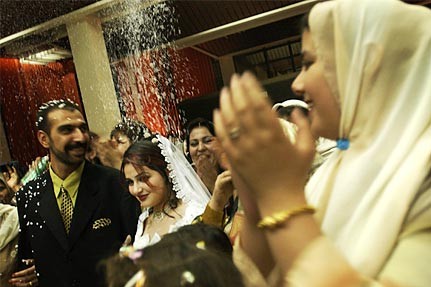
Iraqi marriages defy civil war spectre

By Ahmed Janabi
Thursday 23 March 2006, 11:06 Makka Time, 8:06 GMT
Many Iraqis dismiss the possibility of civil war in their country saying the Iraqi tribal, ethnic, religious and sectarian mosaic is interconnected through blood and marriage.
Despite widespread speculation at home and abroad that Iraq is on the verge of civil war, couples from different backgrounds have been defying the theory by marriage. Young men and women – as was the case before the US-led invasion three years ago - from different ethnic, religious and sectarian backgrounds still flock to the civil courts every morning for marriage contracts. Sahira Abd al-Karim, a civil lawyer in Baghdad, confirmed to Aljazeera.net that Iraqis from different backgrounds are still marrying each other. "Sectarianism is something shameful among Iraqis, especially the middle class," she said. "As a lawyer in the civil courts in Baghdad I have seen Sunni marrying Shia, Arab marrying a Kurd. "I myself am a Sunni Arab but my brother has been married to his Shia Arab wife for more than 40 years, and their eldest son married a Turkmen girl. I really cannot see how these people [Iraqis factions] would fight each other." A civil judge in Baghdad who preferred not to reveal his identity told Aljazeera.net that the rate of mixed background marriages has declined slightly, as has marriage in general.

I truly love this....

Imam Ali says: "To renounce the world does not mean not to own nything, it means that nothing should own you".

Be Careful How You Treat Your Games

Great video....

Father Frank's Rant

Rant Number 209 21 March 2006

BehemothFrom the killing fields of Iraq, a troubled British soldier asks the priest:“…what should we do? Quitting? We just had our Defence Minister here…said itwould be a crime to cut and run…leave the Iraqis in the lurch…wrong of us…wediscuss this every day…but no longer believe in it…what do you advise,Padre?”Tough one, Clive. (Not his real name.) A bit of a bugger. Best to have achat with your Army chaplain. But damned right you are to be perplexed. Itisn’t that there aren’t arguments pro and con. That’s normal. But what ifthe moral situation is so diabolical that the West, or what passes for it,whatever it does, it does wrong? We stay in – mayhem goes on, terrorismthrives, Shia and Sunnis slaughter each other, all Iraqis hate us. We getout – Iraq explodes into all-out civil war, the country breaks up, Zarqawitriumphs, etcetera.For a person of a faith, this dilemma seems horrific. Demonic. Tantamount tosaying that a thoughtful believer, a man with a conscience, would have noalternative, no choice, whatever he does, but to sin. Indeed, he’d be forcedto. Damned if you do, damned if you don’t. OK for Realpolitikers, perhaps,but certainly not for a Christian. Because it would mean he is trapped in amalevolent cosmos in which not God but Behemoth is in charge.Don’t groan. I shall clarify. It goes back to Pope St Gregory the Great. Hiscomment on an obscure verse in that delightfully proto-absurdist text, theBook of Job. Of formidable, hippopotamus-like Behemoth, held to symboliseSatan, Job informs us “the sinews of his thighs are knit together”. (40:17)Enlightening, eh? Mercifully St Gregory, a sharp moral theologian, rides tothe rescue. Here is his ingenious exegesis: “The sinews of Satan’s testiclesare wrapped closely together. Meaning the suggestions that he whispers tomen are bound together by crafty tricks. Designed to make us sin. In thisway: though we try to escape sinning one sin, we find we can avoid that onlyby committing another one.”A load of old cobblers, as a sceptical Cockney might quip? Not quite. Satanis of course a spirit. Hence any physical description can only bemetaphorical. St Gregory brings that out. From the devil’s nature – he is aliar and the father of lies – issue his innumerable ruses and twists, aimedat making men stumble. A murderer from the beginning, little wonder he isintent in fomenting strife and wars of all kinds. And his devices can bepretty lethal. Like the four hoodlums convicted in Reading yesterday fortorturing and murdering a girl. As the brutes were at it, one of themconfessed at the trial, “I felt as if somebody else was present in the room:the devil”. It chilled my blood to hear that.Satan’s power, however, is limited. Because he is only a creature.Infinitely inferior to the Creator. (Behemoth, huge and menacing as he is,is still part of God’s design, submitted to Him.) Although the fiend cantempt us, he cannot make us sin. Nor should we fall back on the Evil One toexculpate ourselves from the moral consequences of our free actions. Indeed,it’s best to be wary of exaggerating his influence. “Fr Frank, do youbelieve in the power of evil?” A lady obsessed with exorcisms and possessiononce asked me. “Madam, indeed I do” I replied, “but much more I believe inthe power of good!” Sigh.. I suspect she went on believing the devil is akind of god.Behemoth’s balls apart, do these dilemmas have an acceptable solution? Well,kind of. You see, St Thomas Aquinas holds there is a type of moralperplexity that necessarily entails bad outcomes for an agent but does notthereby threaten our sense of being in a moral universe. In such cases,indeed, whatever a man does, inevitably he sins, given an initial fault forwhich he is responsible. Imagine I have promised my friend Brian to take hischildren to Regent’s Park zoo, while at the same time promising Teresa,another friend, that I would take her children out, on the same day and atthe same time. Whatever he does, thoughtless Fr Frank will sin, i.e. break apromise and cause disappointment and sorrow to some child. No way out. Butwhy? Plainly, because of prior wrongdoing on his part. So, alas, I can onlyescape from the dilemma by doing wrong to someone. But, there is nothingintrinsically diabolical here. No contradiction, no denial of divineProvidence. Only my moral wilfulness, weakness, stupidity or what you will.Logically, by ensnaring myself in such a tangle, by doing something I shouldnot have done in the first place, I have brought it about that I cannot butdo wrong, whatever I do. Bad, yes. Demonic? Hardly.Only a nagging doubt. In moral casuistry, a lot hinges on the examples.Failing to take children to the zoo is one thing. Guess someone who has soldhis soul to the devil, like Faust, would feel a little more about worked upabout his plight. (Remember: Faust had given his word. Of course, he was aGerman. A Latin might have had fewer qualms – I say – fiendishly?) WishAquinas had discussed a case like that…Finally, Iraq. In Just War theory terms, it appears almost impossible not toregard the 2003 invasion as a peccatum – a sin. Because it was an aggressiveact of war, unjustified, unnecessary and illegal. Given that initial, fatalstep, with all the destruction, bloodshed and crimes that ensued,necessarily the West, whatever it does or will do, it will be morally wrong.Some grave injustice will follow. And, please, don’t come up with the old,convenient ‘lesser evil’ line. A lesser evil is still an evil. Especiallywhen there was nothing inevitable about it in the first place.So, Clive. As a volunteer, professional soldier in a non-conscript Army,taking the Queen’s money, his scope for conscientious objection, I wouldhave thought, is rather limited. His scruples, however, do him credit. GoodBritish lad. Buon sangue non mente!Revd Frank Julian Gelli

48-Hour Internet Outage Plunges Nation Into Productivity

October 1, 2003 Issue 39•38
BOSTON—An Internet worm that disabled networks across the U.S. Monday and Tuesday temporarily thrust the nation into its most severe maelstrom of productivity since 1992. 48-Hour Internet Outage Plunges Nation Into Productivity "In all my years, I've never seen anything like this," said Price Stern Sloan system administrator Andrew Walton, whose effort to restore web service to his company's network was repeatedly hampered by employees busily working at their computers. "The local-access network is functioning, so people can transfer work projects to one another, but there's no e-mail, no eBay, no flaminglips.com. It's pretty much every office worker's worst nightmare."
According to Samuel Kessler, senior director at Symantec, which makes the popular Norton Antivirus software, the Internet "basically collapsed" Monday at 8:34 a.m. EST.
The Gibe-F worm, an e-mail-transmittable virus, initiated cascading server failures. Within an hour, Internet service to more than 90 percent of the U.S. was disabled, either by the worm or by network firewalls that initiated security protocols.
"Unlike SoBig or Blaster, this worm didn't harm individual computers; it just used them as a gate to attack the Internet at the ISP level," Kessler said. "Computer technicians at most offices couldn't do anything but sit by helplessly as people worked through stacks of filing, wrote business-related letters they'd put off for months, and sold record amounts of goods and services over the phone."
Shortly after office workers found their web, e-mail, and instant-messaging capabilities disabled, reports of torrential productivity began to reach corporate offices nationwide.
"My first thought was 'My God, this has to be some kind of mistake,'" said Prudential Insurance executive vice-president Shane Mullins of San Francisco. "My e-mail wasn't working. Nerve.com wasn't working. I eventually found out that the company web site wasn't working, either. But by that time, my inbox was filling up like you wouldn't believe." The Internet outage forced a Minneapolis couple to tackle a task they'd put off for months."My actual physical inbox," Mullins added. "It's this gray plastic thing on my desktop—the top of the desk I sit at."
With workers denied access to ESPN.com, Salon, Fark.com, and Friendster, employers struggled to keep up with the sudden increase in efficiency.
"Our office was working at roughly 95 percent efficiency," said Steven Glover, an advertising executive and creative team leader at Rae Jaynes Houser. "It's problematic to have the rate jump like that—it sets a precedent that will be impossible to maintain once the Internet comes back."
Glover said his department failed to reach 100 percent productivity only because employees stopped work every few minutes throughout the outage to see if Internet service had been restored.
"This is terrible," said Miami resident Ron Lewison, an employee at Gladstone Finance and an Amazon.com Top 500 Reviewer. "For two days, I've been denied access to the vital information I need to go about my workday. In the absence of that information, I've been forced to go about my job."
According to Labor Department statistics, companies affected by the Internet outage generated an estimated $4 to $6 billion in extra revenue.
"Losses to online retail companies will be considerable, " said Jae Miles, senior financial economist at Banc One Capital Markets in Chicago. "Nevertheless, the outage's overall impact on the national economy will be a positive one. The losses should be easily offset by the gains to companies that depend primarily on people finishing actual work."
As of press time, many administrators had begun to apply a patch that combats the Gibe-F worm.
"Thank God, Earthlink service is back, and with it, online shopping and entertainment news," office worker Emily Jaynes said at 7 p.m. Tuesday. "I'm ready to head home now. I couldn't bear to spend another evening repainting furniture and using my pool."
Financial experts say they hope to have detailed data on the economic impact of the outage within the next 24 hours.
"When American office workers are denied access to vast, complex streams of ever-fluctuating and evolving information, they tend to get a lot done," said Nicole Dansby, a business-information analyst employed by the New York Stock Exchange. "The extended Internet outage may or may not have had something to do with the Dow's 278-point jump Tuesday. I'll have to, you know, check the web for a few hours and get back to you."

Fuck Everything, We're Doing Five Blades

Would someone tell me how this happened? We were the fucking vanguard of shaving in this country. The Gillette Mach3 was the razor to own. Then the other guy came out with a three-blade razor. Were we scared? Hell, no. Because we hit back with a little thing called the Mach3Turbo. That's three blades and an aloe strip. For moisture. But you know what happened next? Shut up, I'm telling you what happened—the bastards went to four blades. Now we're standing around with our cocks in our hands, selling three blades and a strip. Moisture or no, suddenly we're the chumps. Well, fuck it. We're going to five blades.
Sure, we could go to four blades next, like the competition. That seems like the logical thing to do. After all, three worked out pretty well, and four is the next number after three. So let's play it safe. Let's make a thicker aloe strip and call it the Mach3SuperTurbo. Why innovate when we can follow? Oh, I know why: Because we're a business, that's why!
You think it's crazy? It is crazy. But I don't give a shit. From now on, we're the ones who have the edge in the multi-blade game. Are they the best a man can get? Fuck, no. Gillette is the best a man can get.
What part of this don't you understand? If two blades is good, and three blades is better, obviously five blades would make us the best fucking razor that ever existed. Comprende? We didn't claw our way to the top of the razor game by clinging to the two-blade industry standard. We got here by taking chances. Well, five blades is the biggest chance of all.
Here's the report from Engineering. Someone put it in the bathroom: I want to wipe my ass with it. They don't tell me what to invent—I tell them. And I'm telling them to stick two more blades in there. I don't care how. Make the blades so thin they're invisible. Put some on the handle. I don't care if they have to cram the fifth blade in perpendicular to the other four, just do it!
You're taking the "safety" part of "safety razor" too literally, grandma. Cut the strings and soar. Let's hit it. Let's roll. This is our chance to make razor history. Let's dream big. All you have to do is say that five blades can happen, and it will happen. If you aren't on board, then fuck you. And if you're on the board, then fuck you and your father. Hey, if I'm the only one who'll take risks, I'm sure as hell happy to hog all the glory when the five-blade razor becomes the shaving tool for the U.S. of "this is how we shave now" A.
People said we couldn't go to three. It'll cost a fortune to manufacture, they said. Well, we did it. Now some egghead in a lab is screaming "Five's crazy?" Well, perhaps he'd be more comfortable in the labs at Norelco, working on fucking electrics. Rotary blades, my white ass! Maybe I'm wrong. Maybe we should just ride in Bic's wake and make pens. Ha! Not on your fucking life! The day I shadow a penny-ante outfit like Bic is the day I leave the razor game for good, and that won't happen until the day I die!
The market? Listen, we make the market. All we have to do is put her out there with a little jingle. It's as easy as, "Hey, shaving with anything less than five blades is like scraping your beard off with a dull hatchet." Or "You'll be so smooth, I could snort lines off of your chin." Try "Your neck is going to be so friggin' soft, someone's gonna walk up and tie a goddamn Cub Scout kerchief under it." I know what you're thinking now: What'll people say? Mew mew mew. Oh, no, what will people say?! Grow the fuck up. When you're on top, people talk. That's the price you pay for being on top. Which Gillette is, always has been, and forever shall be, Amen, five blades, sweet Jesus in heaven.
Stop. I just had a stroke of genius. Are you ready? Open your mouth, baby birds, cause Mama's about to drop you one sweet, fat nightcrawler. Here she comes: Put another aloe strip on that fucker, too. That's right. Five blades, two strips, and make the second one lather. You heard me—the second strip lathers. It's a whole new way to think about shaving. Don't question it. Don't say a word. Just key the music, and call the chorus girls, because we're on the edge—the razor's edge—and I feel like dancing.

The Frown tells you how to become a republican

great cartoon, click here...

Porn cocktail leaves a bitter taste

A bill that would ban 'obscene public acts' such as sunbathing has provoked angry protests, writes John Aglionby
Tuesday March 21, 2006
Indonesia's burgeoning conservative Islamic movement, which had been on a fairly steep upward trajectory over the last few years, has encountered its first significant roadblock. How the situation is resolved is likely to shape socio-political dynamics for the next few years in the world's most-populous but largely moderate Muslim nation.
Causing ructions is not some aspect of theology, but an attempt to enact a wide-ranging anti-pornography bill.
The legislation has sparked such a vehement backlash that its proponents, the Islamic-based Prosperous Justice Party (PKS) and a slew of Muslim organisations, are having to beat a somewhat undignified retreat. By Indonesian standards, where building consensus and not causing loss of face are fundamental social tenets and few people outside a liberal minority dare challenge the Islamic establishment, the strength of feeling is almost unprecedented.

Why Iraq's Police Are a Menace

Critics say Interior Minister has turned the U.S.-trained force into Shi'ite shock troops

By CHRISTOPHER ALLBRITTON/BAGHDAD

The bodies began to show up early last week. On Monday, 34 corpses were found. In the darkness of Tuesday morning, 15 more men, between the ages of 22 and 40 were found in the back of a pickup truck in the al-Khadra district of western Baghdad. They had been hanged. By daybreak, 40 more bodies were found around the city, most bearing signs of torture before the men were killed execution-style. The most gruesome discovery was an 18-by-24-foot mass grave in the Shi'ite slum of Kamaliyah in east Baghdad containing the bodies of 29 men, clad only in their underwear with their hands bound and their mouths covered with tape. Local residents only found it because the ground was oozing blood. In all, 87 bodies were found over two days in Baghdad.

The grisly discovery was horrible enough, the latest and perhaps most chilling sign that Iraq is descending further into butchery — and quite possibly civil war. But almost as disturbing is the growing evidence that the massacres and others like it are being tolerated and even abetted by Iraq's Shi'ite-dominated police forces, overseen by Iraq's Interior Minister, Bayan Jabr. On his watch, sectarian militias have swelled the ranks of the police units and, Sunnis charge, used their positions to carry out revenge killings against Sunnis. While allowing an Iranian-trained militia to take over the ministry, critics say, Jabr has authorized the targeted assassination of Sunni men and stymied investigations into Interior-run death squads. Despite numerous attempts to contact them, neither Jabr nor Interior Ministry spokesmen responded to requests for comment on this article.

Jabr's and his forces' growing reputation for brutality comes at a particularly inopportune moment for the Bush Administration, which would like to hand over security responsibilities to those same police units as quickly as possible. That has raised the distinct and disturbing possibility that the U.S. is in fact training and arming one side in a conflict seeming to grow worse by the day. "Militias are the infrastructure of civil war," U.S. ambassador Zalmay Khalilzad told TIME recently. Khalilzad has been publicly critical of Jabr and warned that the new security ministries under the next, permanent Iraqi government should be run by competent people who have no ties to militias and who are "non-sectarian." Further U.S. support for training the police and army, he said, depends on it.

But ever since Jabr was appointed Interior Minister after the January 2005 election brought a religious Sh'ite coalition to power, Sunnis allege, he began remaking the paramilitary National Police into Shi'ite shock troops. A member of the Iranian-backed Supreme Council for the Islamic Revolution in Iraq (SCIRI), Jabr fled to Iran in the 1970s to avoid Saddam's crackdown. Jerry Burke, a former civilian senior police advisor to the Interior Ministry, said Jabr's experience with Saddam's government has left him bitter and distrustful of anyone he suspects has ties to the previous regime. That would most certainly include the former members of Saddam Hussein's Special Forces and Republican Guards which initially made up the bulk of the National Police when Jabr took charge.

Read more...

The Israel Lobby

John Mearsheimer and Stephen Walt
For the past several decades, and especially since the Six-Day War in 1967, the centrepiece of US Middle Eastern policy has been its relationship with Israel. The combination of unwavering support for Israel and the related effort to spread ‘democracy’ throughout the region has inflamed Arab and Islamic opinion and jeopardised not only US security but that of much of the rest of the world. This situation has no equal in American political history. Why has the US been willing to set aside its own security and that of many of its allies in order to advance the interests of another state? One might assume that the bond between the two countries was based on shared strategic interests or compelling moral imperatives, but neither explanation can account for the remarkable level of material and diplomatic support that the US provides.
Instead, the thrust of US policy in the region derives almost entirely from domestic politics, and especially the activities of the ‘Israel Lobby’. Other special-interest groups have managed to skew foreign policy, but no lobby has managed to divert it as far from what the national interest would suggest, while simultaneously convincing Americans that US interests and those of the other country – in this case, Israel – are essentially identical. Since the October War in 1973, Washington has provided Israel with a level of support dwarfing that given to any other state. It has been the largest annual recipient of direct economic and military assistance since 1976, and is the largest recipient in total since World War Two, to the tune of well over $140 billion (in 2004 dollars). Israel receives about $3 billion in direct assistance each year, roughly one-fifth of the foreign aid budget, and worth about $500 a year for every Israeli. This largesse is especially striking since Israel is now a wealthy industrial state with a per capita income roughly equal to that of South Korea or Spain.
Other recipients get their money in quarterly installments, but Israel receives its entire appropriation at the beginning of each fiscal year and can thus earn interest on it. Most recipients of aid given for military purposes are required to spend all of it in the US, but Israel is allowed to use roughly 25 per cent of its allocation to subsidise its own defence industry. It is the only recipient that does not have to account for how the aid is spent, which makes it virtually impossible to prevent the money from being used for purposes the US opposes, such as building settlements on the West Bank. Moreover, the US has provided Israel with nearly $3 billion to develop weapons systems, and given it access to such top-drawer weaponry as Blackhawk helicopters and F-16 jets. Finally, the US gives Israel access to intelligence it denies to its Nato allies and has turned a blind eye to Israel’s acquisition of nuclear weapons.
Washington also provides Israel with consistent diplomatic support. Since 1982, the US has vetoed 32 Security Council resolutions critical of Israel, more than the total number of vetoes cast by all the other Security Council members. It blocks the efforts of Arab states to put Israel’s nuclear arsenal on the IAEA’s agenda. The US comes to the rescue in wartime and takes Israel’s side when negotiating peace. The Nixon administration protected it from the threat of Soviet intervention and resupplied it during the October War. Washington was deeply involved in the negotiations that ended that war, as well as in the lengthy ‘step-by-step’ process that followed, just as it played a key role in the negotiations that preceded and followed the 1993 Oslo Accords. In each case there was occasional friction between US and Israeli officials, but the US consistently supported the Israeli position. One American participant at Camp David in 2000 later said: ‘Far too often, we functioned . . . as Israel’s lawyer.’ Finally, the Bush administration’s ambition to transform the Middle East is at least partly aimed at improving Israel’s strategic situation.

Rachel Corrie's Letters Home

Marking the third anniversary of the sad death of the American peace activist Rachel Corrie who was crushed under the Israeli bulldozers, publishing some letter (first published in March 18 2003 by UK's The Guardian ) written by the great hero who died for the cause of the Palestinian people is the best tribute to pay her.
Hi friends and family, and others,
I have been in Palestine for two weeks and one hour now, and I still have very few words to describe what I see. It is most difficult for me to think about what's going on here when I sit down to write back to the United States. Something about the virtual portal into luxury. I don't know if many of the children here have ever existed without tank-shell holes in their walls and the towers of an occupying army surveying them constantly from the near horizons. I think, although I'm not entirely sure, that even the smallest of these children understand that life is not like this everywhere. An eight-year-old was shot and killed by an Israeli tank two days before I got here, and many of the children murmur his name to me - Ali - or point at the posters of him on the walls. The children also love to get me to practice my limited Arabic by asking me, "Kaif Sharon?" "Kaif Bush?" and they laugh when I say, "Bush Majnoon", "Sharon Majnoon" back in my limited arabic. (How is Sharon? How is Bush? Bush is crazy. Sharon is crazy.) Of course this isn't quite what I believe, and some of the adults who have the English correct me: "Bush mish Majnoon" ... Bush is a businessman. Today I tried to learn to say, "Bush is a tool", but I don't think it translated quite right. But anyway, there are eight-year-olds here much more aware of the workings of the global power structure than I was just a few years ago.
Nevertheless, no amount of reading, attendance at conferences, documentary viewing and word of mouth could have prepared me for the reality of the situation here. You just can't imagine it unless you see it - and even then you are always well aware that your experience of it is not at all the reality: what with the difficulties the Israeli army would face if they shot an unarmed US citizen, and with the fact that I have money to buy water when the army destroys wells, and the fact, of course, that I have the option of leaving. Nobody in my family has been shot, driving in their car, by a rocket launcher from a tower at the end of a major street in my hometown. I have a home. I am allowed to go see the ocean.
When I leave for school or work I can be relatively certain that there will not be a heavily armed soldier waiting halfway between Mud Bay and downtown Olympia at a checkpoint with the power to decide whether I can go about my business, and whether I can get home again when I'm done. As an afterthought to all this rambling, I am in Rafah: a city of about 140,000 people, approximately 60% of whom are refugees - many of whom are twice or three times refugees. Today, as I walked on top of the rubble where homes once stood, Egyptian soldiers called to me from the other side of the border, "Go! Go!" because a tank was coming. And then waving and "What's your name?". Something disturbing about this friendly curiosity. It reminded me of how much, to some degree, we are all kids curious about other kids. Egyptian kids shouting at strange women wandering into the path of tanks. Palestinian kids shot from the tanks when they peak out from behind walls to see what's going on.
International kids standing in front of tanks with banners. Israeli kids in the tanks anonymously - occasionally shouting and also occasionally waving - many forced to be here, many just agressive - shooting into the houses as we wander away.
I've been having trouble accessing news about the outside world here, but I hear an escalation of war on Iraq is inevitable. There is a great deal of concern here about the "reoccupation of Gaza". Gaza is reoccupied every day to various extents but I think the fear is that the tanks will enter all the streets and remain here instead of entering some of the streets and then withdrawing after some hours or days to observe and shoot from the edges of the communities. If people aren't already thinking about the consequences of this war for the people of the entire region then I hope you will start.
My love to everyone. My love to my mom. My love to smooch. My love to fg and barnhair and sesamees and Lincoln School. My love to Olympia.
Rachel
February 20 2003
Mama, Now the Israeli army has actually dug up the road to Gaza, and both of the major checkpoints are closed. This means that Palestinians who want to go and register for their next quarter at university can't. People can't get to their jobs and those who are trapped on the other side can't get home; and internationals, who have a meeting tomorrow in the West Bank, won't make it. We could probably make it through if we made serious use of our international white person privilege, but that would also mean some risk of arrest and deportation, even though none of us has done anything illegal.
The Gaza Strip is divided in thirds now. There is some talk about the "reoccupation of Gaza", but I seriously doubt this will happen, because I think it would be a geopolitically stupid move for Israel right now. I think the more likely thing is an increase in smaller below-the-international-outcry-radar incursions and possibly the oft-hinted "population transfer". I am staying put in Rafah for now, no plans to head north. I still feel like I'm relatively safe and think that my most likely risk in case of a larger-scale incursion is arrest. A move to reoccupy Gaza would generate a much larger outcry than Sharon's assassination-during-peace-negotiations/land grab strategy, which is working very well now to create settlements all over, slowly but surely eliminating any meaningful possibility for Palestinian self-determination. Know that I have a lot of very nice Palestinians looking after me. I have a small flu bug, and got some very nice lemony drinks to cure me. Also, the woman who keeps the key for the well where we still sleep keeps asking me about you. She doesn't speak a bit of English, but she asks about my mom pretty frequently - wants to make sure I'm calling you.
Love to you and Dad and Sarah and Chris and everybody.
Rachel
February 27 2003
(To her mother) Love you. Really miss you. I have bad nightmares about tanks and bulldozers outside our house and you and me inside. Sometimes the adrenaline acts as an anesthetic for weeks and then in the evening or at night it just hits me again - a little bit of the reality of the situation. I am really scared for the people here. Yesterday, I watched a father lead his two tiny children, holding his hands, out into the sight of tanks and a sniper tower and bulldozers and Jeeps because he thought his house was going to be exploded. Jenny and I stayed in the house with several women and two small babies. It was our mistake in translation that caused him to think it was his house that was being exploded. In fact, the Israeli army was in the process of detonating an explosive in the ground nearby - one that appears to have been planted by Palestinian resistance.
This is in the area where Sunday about 150 men were rounded up and contained outside the settlement with gunfire over their heads and around them, while tanks and bulldozers destroyed 25 greenhouses - the livelihoods for 300 people. The explosive was right in front of the greenhouses - right in the point of entry for tanks that might come back again. I was terrified to think that this man felt it was less of a risk to walk out in view of the tanks with his kids than to stay in his house. I was really scared that they were all going to be shot and I tried to stand between them and the tank. This happens every day, but just this father walking out with his two little kids just looking very sad, just happened to get my attention more at this particular moment, probably because I felt it was our translation problems that made him leave.
I thought a lot about what you said on the phone about Palestinian violence not helping the situation. Sixty thousand workers from Rafah worked in Israel two years ago. Now only 600 can go to Israel for jobs. Of these 600, many have moved, because the three checkpoints between here and Ashkelon (the closest city in Israel) make what used to be a 40-minute drive, now a 12-hour or impassible journey. In addition, what Rafah identified in 1999 as sources of economic growth are all completely destroyed - the Gaza international airport (runways demolished, totally closed); the border for trade with Egypt (now with a giant Israeli sniper tower in the middle of the crossing); access to the ocean (completely cut off in the last two years by a checkpoint and the Gush Katif settlement).
The count of homes destroyed in Rafah since the beginning of this intifada is up around 600, by and large people with no connection to the resistance but who happen to live along the border. I think it is maybe official now that Rafah is the poorest place in the world. There used to be a middle class here - recently. We also get reports that in the past, Gazan flower shipments to Europe were delayed for two weeks at the Erez crossing for security inspections. You can imagine the value of two-week-old cut flowers in the European market, so that market dried up. And then the bulldozers come and take out people's vegetable farms and gardens.
What is left for people? Tell me if you can think of anything. I can't. If any of us had our lives and welfare completely strangled, lived with children in a shrinking place where we knew, because of previous experience, that soldiers and tanks and bulldozers could come for us at any moment and destroy all the greenhouses that we had been cultivating for however long, and did this while some of us were beaten and held captive with 149 other people for several hours - do you think we might try to use somewhat violent means to protect whatever fragments remained? I think about this especially when I see orchards and greenhouses and fruit trees destroyed - just years of care and cultivation. I think about you and how long it takes to make things grow and what a labour of love it is. I really think, in a similar situation, most people would defend themselves as best they could. I think Uncle Craig would. I think probably Grandma would. I think I would. You asked me about non-violent resistance. When that explosive detonated yesterday it broke all the windows in the family's house. I was in the process of being served tea and playing with the two small babies. I'm having a hard time right now. Just feel sick to my stomach a lot from being doted on all the time, very sweetly, by people who are facing doom. I know that from the United States, it all sounds like hyperbole. Honestly, a lot of the time the sheer kindness of the people here, coupled with the overwhelming evidence of the wilful destruction of their lives, makes it seem unreal to me. I really can't believe that something like this can happen in the world without a bigger outcry about it. It really hurts me, again, like it has hurt me in the past, to witness how awful we can allow the world to be. I felt after talking to you that maybe you didn't completely believe me. I think it's actually good if you don't, because I do believe pretty much above all else in the importance of independent critical thinking. And I also realise that with you I'm much less careful than usual about trying to source every assertion that I make. A lot of the reason for that is I know that you actually do go and do your own research. But it makes me worry about the job I'm doing. All of the situation that I tried to enumerate above - and a lot of other things - constitutes a somewhat gradual - often hidden, but nevertheless massive - removal and destruction of the ability of a particular group of people to survive. This is what I am seeing here. The assassinations, rocket attacks and shooting of children are atrocities - but in focusing on them I'm terrified of missing their context. The vast majority of people here - even if they had the economic means to escape, even if they actually wanted to give up resisting on their land and just leave (which appears to be maybe the less nefarious of Sharon's possible goals), can't leave. Because they can't even get into Israel to apply for visas, and because their destination countries won't let them in (both our country and Arab countries). So I think when all means of survival is cut off in a pen (Gaza) which people can't get out of, I think that qualifies as genocide. Even if they could get out, I think it would still qualify as genocide. Maybe you could look up the definition of genocide according to international law. I don't remember it right now. I'm going to get better at illustrating this, hopefully. I don't like to use those charged words. I think you know this about me. I really value words. I really try to illustrate and let people draw their own conclusions. Anyway, I'm rambling. Just want to write to my Mom and tell her that I'm witnessing this chronic, insidious genocide and I'm really scared, and questioning my fundamental belief in the goodness of human nature. This has to stop. I think it is a good idea for us all to drop everything and devote our lives to making this stop. I don't think it's an extremist thing to do anymore. I still really want to dance around to Pat Benatar and have boyfriends and make comics for my coworkers. But I also want this to stop. Disbelief and horror is what I feel. Disappointment. I am disappointed that this is the base reality of our world and that we, in fact, participate in it. This is not at all what I asked for when I came into this world. This is not at all what the people here asked for when they came into this world. This is not the world you and Dad wanted me to come into when you decided to have me. This is not what I meant when I looked at Capital Lake and said: "This is the wide world and I'm coming to it." I did not mean that I was coming into a world where I could live a comfortable life and possibly, with no effort at all, exist in complete unawareness of my participation in genocide. More big explosions somewhere in the distance outside. When I come back from Palestine, I probably will have nightmares and constantly feel guilty for not being here, but I can channel that into more work. Coming here is one of the better things I've ever done. So when I sound crazy, or if the Israeli military should break with their racist tendency not to injure white people, please pin the reason squarely on the fact that I am in the midst of a genocide which I am also indirectly supporting, and for which my government is largely responsible.
I love you and Dad. Sorry for the diatribe. OK, some strange men next to me just gave me some peas, so I need to eat and thank them.
Rachel

Iran: The Next War

by John Pilger
Has Tony Blair, our minuscule Caesar, finally crossed his Rubicon? Having subverted the laws of the civilized world and brought carnage to a defenseless people and bloodshed to his own, having lied and lied and used the death of a hundredth British soldier in Iraq to indulge his profane self-pity, is he about to collude in one more crime before he goes?
Perhaps he is seriously unstable now, as some have suggested. Power does bring a certain madness to its prodigious abusers, especially those of shallow disposition. In The March of Folly: From Troy to Vietnam, the great American historian Barbara Tuchman described Lyndon B. Johnson, the president whose insane policies took him across his Rubicon in Vietnam. "He lacked [John] Kennedy's ambivalence, born of a certain historical sense and at least some capacity for reflective thinking," she wrote. "Forceful and domineering, a man infatuated with himself, Johnson was affected in his conduct of Vietnam policy by three elements in his character: an ego that was insatiable and never secure; a bottomless capacity to use and impose the powers of his office without inhibition; a profound aversion, once fixed upon a course of action, to any contradictions."
That, demonstrably, is Bush, Cheney, Rumsfeld and the rest of the cabal that has seized power in Washington. But there is a logic to their idiocy – the goal of dominance. It also describes Blair, for whom the only logic is vainglorious. And now he is threatening to take Britain into the nightmare on offer in Iran. His Washington mentors are unlikely to ask for British troops, not yet. At first, they will prefer to bomb from a safe height, as Bill Clinton did in his destruction of Yugoslavia. They are aware that, like the Serbs, the Iranians are a serious people with a history of defending themselves and who are not stricken by the effects of a long siege, as the Iraqis were in 2003. When the Iranian defense minister promises "a crushing response," you sense he means it.

Great cartoon on Clark's ID cards

A hint of politics and opinion, a dapper dog singing and the cutest puppy pianist on the planet. A splendid reworking of the Major General's Song by Mr DogHorse, animation by me. You can download the MP3 (2MB) or read the lyrics over at Stablesound. There's also a desktop wallpaper with our favourite characters from the show. You can find out more about ID cards and the proposed national database at NO2ID or let your mp know what you think.

Fears of a lost generation of Afghan pupils as Taliban targets schools

Arson attacks and death threats have turned playgrounds into battlegrounds in Helmand

Declan Walsh in Sarkh Doz

Thursday March 16, 2006

Guardian

Class is out at Sarkh Doz, a sleepy village near the sweeping Helmand river. A ghostly silence fills the school playground, the gate is bolted shut and the proud yellow classrooms have been reduced to a blackened shell of cinders. Taliban arsonists set the blaze, locals say. One night a car full of militants roared up, doused the building in petrol and struck a match. Then they continued to the next village, Mangalzai, and torched that school too.

Now both buildings - recently built with American funding - are deserted, the teachers have fled and another body blow has been dealt to aid efforts in Helmand, the southern province where 3,300 British troops are deploying. "Terrible," said police chief Ahmed Samonwal, shaking his head as he walked past the blackened schools. "This is the work of our enemies." Playground has become battleground in the Afghan south, where the resurgent Taliban have launched a fierce campaign of arson, intimidation and assassination that has closed 200 schools in recent months and left 100,000 students at home.

Teachers are in the front line. In December assassins dragged a man who defied warnings to stop teaching girls from his classroom in Nad Ali, another Helmand district, and shot him at the school gate. Four other teachers have been killed and hundreds more threatened with "night letters" - handwritten notices delivered in the dark, ordering them to stop teaching or die.

The terror campaign underscores the challenge facing British troops in securing a province ruled by terror as much as central government. "Our teachers are helpless because security is so weak," said the provincial education head Hayat Allah Rafiqi. "By day the government rules but by night it is in the hands of the Taliban."

Sixty-six of Helmand's 224 schools have closed, he said, and others have scaled back classes as parents move their children to the safety of the main towns. Even there, protection is uncertain. Two days after the Nad Ali murder, gunmen burst into Karte Laghan secondary school in the provincial capital, Laskhar Gah, killing a watchman and a student. The attack occurred less than a mile from the new British base.

"We are always afraid of being shot or attacked on our way home," said Gul Ali, a female teacher of chemistry and biology at the school.

Jami' al-Sa'adat

(The Collector of Felicities)
By Muhammad Mahdi ibn Abi Dharr al-Naraqi
In the Name of Allah, the Compassionate, the Merciful
Man has a soul and physical body, each of which is subject to its own pleasures and diseases. What harms the body is sickness, and that which gives it pleasure lies in its well-being, health and whatever is in harmony with its nature. The science that deals with the health and the maladies of the body is the science of medicine.
The diseases of the soul constitute evil habits and submission to lusts that degrade man doom to the level of beasts. The pleasures of the 'soul are moral and ethical virtues which elevate man and move him closer to perfection and wisdom bringing him close to God. The study that deals with such matters is the science of ethics ('ilm al-akhlaq).
Before we commence a discussion of the main topics of our subject, we must prove that the soul of man is incorporeal, possesses an existence independent of the body, and is immaterial. In order to prove this, a number of arguments have been set forth amongst which we can mention the following:
1. One of the characteristics of bodies is that whenever new forms and shapes are imposed upon them, they renounce and abandon their previous forms or shapes. In the human soul, however, new forms, whether of the sensible or of the intellectual nature, enter continuously without wiping out the previously existing forms. In fact, the more impressions and intellectual forms enter the mind, the stronger does the soul become.
2. When three elements of colour, smell, and taste, appear in an object, it is transformed. The human soul however, perceives all of these conditions without being materially affected by them.
3. The pleasures that man experiences from intellectual cognition can belong only to the soul, since man's body plays no role in it.
4. Abstract forms and concepts which are perceived by the mind, are undoubtedly non-material and indivisible. Accordingly, their vehicle, which is the soul, must also be indivisible, and therefore immaterial.
5. The physical faculties of man receive their input through the senses, while the human soul perceives certain things without the help of the senses. Among the things that the human soul comprehends without relying on the senses, are the law of contradiction, the idea that the whole is always greater than one of its parts, and other such universal principles. The negation of the errors made by the senses on the part of the soul, such as optical illusions, is done with the aid of these abstract concepts, even though the raw material required for making corrections is provided by the senses.
Now that the independent existence of the soul has been proved, let us see what are the things responsible for its well-being and delight, and what are the things that make it sick and unhappy. The health and perfection of the soul lies in its grasp of the real nature of things , and this understanding can liberate it from the narrow prison of lust and greed and all other fetters which inhibit its evolution and edification towards that ultimate stage of human perfection which lies in man's nearness to God. This is the goal of `speculative wisdom' (al-hikmat al-nadariyyah). At the same time, the human soul must purge itself of any evil habits and traits it may have, and replace them with ethical and virtuous modes of thought and conduct. This is the goal of `practical wisdom' (al-hikmat al-`amaliyyah). Speculative and practical wisdom are related like matter and form; they cannot exist without each other.
As a matter of principle, the term "philosophy" refers to `speculative wisdom' and "ethics" refers to `.practical wisdom'. A man who has mastered both speculative wisdom and practical wisdom is a microcosmic mirror of the larger universe: the macrocosm.

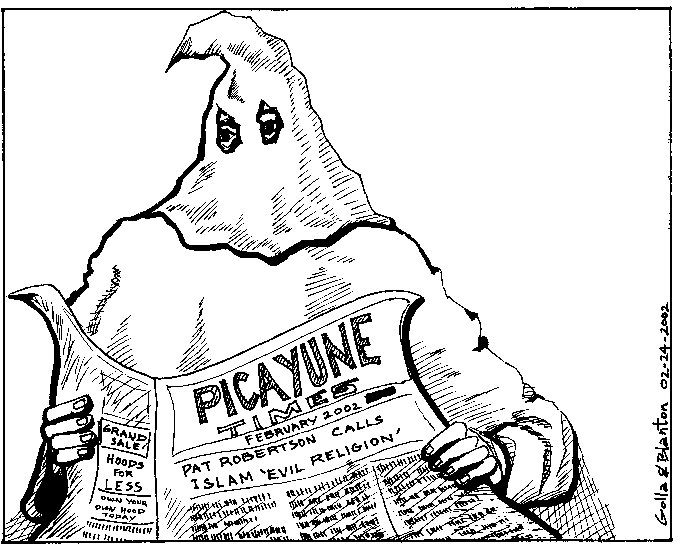
Top US evangelist targets Islam

Outspoken US Christian evangelical broadcaster Pat Robertson has accused Muslims of planning world domination, and said some were "satanic".

On his live television programme, The 700 Club, he said radical Islamists were inspired by "demonic power".

A US religious liberty watchdog called the comments "grossly irresponsible".

Mr Robertson had to apologise recently for calling for Venezuela's president to be killed, and saying Ariel Sharon was struck down by divine retribution.

His latest comments were expunged from The 700 Club's website, but Mr Robertson's Virginia-based Christian Broadcasting Network confirmed them with a transcript.

'Crazed fanatics'

On the programme, the 75-year-old preacher responded to a news item about the reaction of Muslims in Europe to the publishing of cartoons satirising the Prophet Muhammad.

The footage showed Muslims screaming "May Allah bomb you! May Osama Bin Laden bomb you!"

Mr Robertson said the pictures "just shows the kind of people we're dealing with. These people are crazed fanatics, and I want to say it now: I believe it's motivated by demonic power. It is satanic and it's time we recognize what we're dealing with".

He went on to say that "Islam is not a religion of peace", and "the goal of Islam, ladies and gentlemen whether you like it or not, is world domination".

Mr Robertson said in a statement later he was referring specifically to terrorists as being motivated by Satan.

Outstanding Photo Blog

This shows the amazing work of Dan Chung.. please see to enjoy...

Invisible city

Chongqing is the fastest-growing urban centre on the planet. Its population is already bigger than that of Peru or Iraq, with half a million more arriving every year in search of a better life. And yet so frequently is this story repeated in China, that outside the country its name barely registers. Jonathan Watts spends 24 hours in the megalopolis you've never heard of
Jonathan Watts
Wednesday March 15, 2006
Guardian
At some point this year, our species will prove Darwin wrong. For the first time since the dawn of civilisation, the human being is about to become a predominantly urban creature: humans have not evolved to fit our habitat, we have changed our habitat to suit ourselves.
According to the United Nations, the planet's population is currently split almost right down the middle: 3.2 billion in the city, 3.2 billion in the countryside. But by the start of 2007, the balance will have tipped decisively away from the fields and towards the skyscrapers.
No one knows for sure precisely where and when urban life started. But we can make a good guess about where the urbanising trend will reach its zenith. Simply count which skylines have the most cranes, track where the bulk of the world's concrete is being poured or follow one of the biggest, fastest movements of humanity in history. All lead east, to China.
Every year, 8.5 million Chinese peasants move into cities. Most of their destinations are mere specks on western maps, if they appear at all. But their populations put them on a par with some of the world's megalopolises. Britain has five urban centres of more than a million people; China has ninety. A few - Beijing, Shanghai, Hong Kong and Nanjing - are well known around the world. The names of many others - Suqian, Suining, Xiantao, Xinghua, Liuan - are unfamiliar even to many Chinese. Nowhere is the staggering urbanisation of the world more evident than in Chongqing. Never heard of it? This is where the pace and scale of urbanisation is probably faster and bigger than anywhere in the world today. This is the Coketown of the early 21st century.
Set in the middle reaches of the Yangtze, this former trading centre and treaty port has long been the economic hub of western China. But after its government was given municipal control of surrounding territory the size of many countries, it has grown and grown, becoming what is now the world's biggest municipality with 31 million residents (more people than Iraq, Peru or Malaysia). The population in its metropolitan areas will double from 10 million to 20 million in the next 13 years.
When the planet's rural-urban balance tips, it is as likely to happen here as anywhere. To get a snapshot, I spent a day with a Channel 4 film crew in this megalopolis - just the sort of day, in fact, when humanity might pass the halfway point on its millennia-long journey out of the countryside.

Back to the future

Robert Tait looks back more than 50 years to the last time Iran was referred to the world's official guardian of peace and security

Robert Tait

Wednesday March 15, 2006

Guardian Unlimited

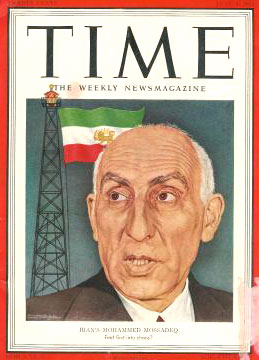
Standing before the hallowed chambers of the UN security council, the charismatic Iranian leader confronted his adversaries with the combative defiance that was his hallmark. Bullying foreigners, he proclaimed, wanted to deny Iran its legitimate right to an energy resource vital to its future. No amount of international pressure would force his government to retreat from a position that had the full support of the great Iranian nation. To almost universal surprise, security council members were swayed by the demagogic statesman's arguments and voted to shelve the resolution rather than take punitive action against Iran. It was a devastating blow for a prevailing western worldview whose sense of self-righteousness had never before suffered such a sharp reverse. With Iran's nuclear case finally going before the council this week, it is a scenario the US and EU hope is too far fetched to become reality as they endeavour to force Tehran to abandon a programme they believe is designed to produce an atomic bomb. Yet it is not fantasy, but a description of what happened the last time Iran was referred to the security council. The date was October 1951, and the Iranian leader addressing the august body was Mohammed Mossadeq, the democratically-elected prime minister, who had outraged Britain by nationalising his country's British-owned oil industry. After moving warships to the Persian gulf and imposing a blockade intended to cripple the Iranian economy, Britain sought to regain control of the Anglo-Iranian Oil Company by having Iran referred to the security council, with the humiliating results just described. But that wasn't the end of the story. Having failed to achieve their ends through diplomacy, the British resorted to sinister underhand means. With official approval, the British secret service - the forerunner of MI6 - colluded with the CIA to stage a coup in which Mossadeq's government was toppled and the rule of the last shah, until then teetering and uncertain, re-established.

Latin America and Asia are at last breaking free of Washington's grip

The US-dominated world order is being challenged by a new spirit of independence in the global south

Noam Chomsky

Wednesday March 15, 2006

The Guardian

The prospect that Europe and Asia might move towards greater independence has troubled US planners since the second world war. The concerns have only risen as the "tripolar order" - Europe, North America and Asia - has continued to evolve. Every day Latin America, too, is becoming more independent. Now Asia and the Americas are strengthening their ties while the reigning superpower, the odd man out, consumes itself in misadventures in the Middle East. Regional integration in Asia and Latin America is a crucial and increasingly important issue that, from Washington's perspective, betokens a defiant world gone out of control. Energy, of course, remains a defining factor - the object of contention - everywhere. China, unlike Europe, refuses to be intimidated by Washington, a primary reason for the fear of China by US planners, which presents a dilemma: steps toward confrontation are inhibited by US corporate reliance on China as an export platform and growing market, as well as by China's financial reserves - reported to be approaching Japan's in scale. In January, Saudi Arabia's King Abdullah visited Beijing, which is expected to lead to a Sino-Saudi memorandum of understanding calling for "increased cooperation and investment between the two countries in oil, natural gas and investment", the Wall Street Journal reports.

Fishing for a Pretext to Squeeze Iran

By Juan Cole
Iran threatened last week to use the oil weapon if the United Nations Security Council imposes sanctions on the country because of its nuclear research program, promising “harm and pain” to the United States. In addition to consumer anxieties about oil prices, rumors of a planned U.S. or Israeli airstrike on Iran keep flying, and neighboring Iraqi Shiites have threatened reprisals if that is done to their brethren. What is driving the crisis between the Bush administration and Iran and ratcheting up the rhetoric? Iranian Interior Minister Mostafa Pour-Mohammadi said on Friday, “If sanctions are imposed, we will definitely use the oil tool and other tools and we will stop at nothing.” The regime is clearly fearful of an international economic boycott, but feels it has its own advantages in the struggle. With increasing demand from India and China and instability in Nigeria and Iraq, Iran’s crude oil exports are important in maintaining an affordable price, especially in the winters. In some ways, by invading Iraq and destabilizing it, as well as fostering the rise of Shiite religious parties in Baghdad, the Bush administration has inadvertently strengthened Shiite Iran’s hand. Although the doubling of petroleum prices in the past two years has so far been absorbed by the world economy, many analysts are convinced that if the price went up to $75 a barrel and stayed there for two years, it would add significantly to the underlying rate of inflation and begin subtracting 2.5% a year from world growth. President Mahmoud Ahmadinejad chimed in with regard to the American threats: “They know that they are not capable of causing the least harm to Iranian people. They will suffer more.” From cbc.ca Related Links “Bush Ties Iran to Roadside Bombs in Iraq" (March 13, 2006) The president asserts that many of the improvised explosive devices (IEDs), which have proved so deadly to U.S. forces in Iraq, originate in Iran.(March 13, 2006) Washington Post article about Bush’s attempt to build opposition to theocracy in Iran.“New ‘Cold War’ Looms with Iran" (March 13, 2006) BBC article on how the U.S. relationship with Tehran is starting to resemble its pre-1989 relationship with the U.S.S.R.“Britain Wants to Leave the Door Open to Negotiate With Iran" (March 13, 2006) Britain’s foreign secretary, Jack Straw, says that any U.N. pressure on Iran should be “incremental” and “reversible."“Russia Accuses Iran of Blocking Nuclear Diplomacy" (March 13, 2006) Russia’s foreign minister, Sergei Lavrov, says “Iran is absolutely no help to those who want to find peaceful ways to solve this problem."Iran is a mid-size country of some 70 million, with a per capita income of only about $2,000 a year. It has no weapons of mass destruction, and its conventional military forms no threat to the United States. From an Iranian point of view, the Americans are simply being unreasonably aggressive. Supreme Jurisprudent Ali Khamenei has given a fatwa or formal religious ruling against nuclear weapons, and President Ahmadinejad at his inauguration denounced such arms and committed Iran to remaining a nonnuclear weapons state. In fact, the Iranian regime has gone further, calling for the Middle East to be a nuclear-weapons-free zone. On Feb. 26, Ahmadinejad said: “We too demand that the Middle East be free of nuclear weapons; not only the Middle East, but the whole world should be free of nuclear weapons.” Only Israel among the states of the Middle East has the bomb, and its stockpile provoked the arms race with Iraq that in some ways led to the U.S. invasion of 2003. The U.S. has also moved nukes into the Middle East at some points, either on bases in Turkey or on submarines.

The Daily Show on Rummy and McGovern

Jon Stewart had a grand old time of picking apart Rumsfeld and the media over Ray McGovern's question to "the Donald." After Rumsfeld denies saying he told us where WMD's were in Iraq. He plays the tape of Rummy telling us exactly the opposite. Very funny, click here to watch...